



As usual, personalities, professionals, entities and companies from the region have come together to collaborate in the promotional video of the Mamapop charity concert, which aims to raise funds for breast cancer research. This year, to the rhythm of a Catalan version of Kool & the Gang’s ‘Celebration’, the following have participated: Rubén Viñuales, mayor of Tarragona, Sandra Ramos, minister of culture of Tarragona, Noemí Llauradó, president of the Tarragona Provincial Council, journalist Xavier Grasset, actors Oriol Grau and Toni Albà, singer Mariona Escoda; as well as players from Nàstic de Tarragona Àlex Almansa and Oriol Subirats. The Associació Dones de la Casa del Mar de Tarragona, part of the CaixaBank Tarragona team and members of the Rotary Club Tarragona are also part of the promotional video. You can access the full video through this link .
The Mamapop Disco Remember! charity concert will premiere in Tarragona with a proposal that will cover great disco music themes from various generations with hits by Boney M, Kool & The Gang, Earth, Wind & Fire, Chic, Madonna, The Jacksons, Wham!, Cyndi Lauper, George Michael, A-ha, Kylie Minogue, Lionel Richie & Diana Ross or Jennifer Rush, among others. The new production maintains the essence of Mamapop: live music and a large-format staging with thirty professionals on stage and a selection of songs recognized by the general public. All profits from the concert will be allocated entirely to breast cancer research at the Institute for Biomedical Research in Southern Catalonia (IRB CatSud).
Mamapop has been collaborating with breast cancer research in Tarragona since 2023 and this will be the fourth edition of the project in the city. As a result of this commitment and the funding provided over the years, Mamapop and IRBCat Sud have been able to promote a Predoctoral Research Grant dedicated to breast cancer research.
The concert, which will have a single performance at the Palau Firal i de Congressos de Tarragona on Saturday 14 November at 8pm, will once again turn music and entertainment into a tool to raise funds for research. Tickets are on sale through www.mamapop.cat and, physically, at Farma Tarraco (C/ de Pere Martell, 5). Mamapop has this edition with the support of the charitable organizations Fundación Repsol, Fundació La Caixa, Port de Tarragona, Factor Energia and Rotary Club Tarragona. In addition to the collaboration of the Tarragona City Council, the Palau Firal i de Congressos de Tarragona and the Diputació de Tarragona. After its premiere in Tarragona, Mamapop Disco Remember will continue its tour with five more concerts in Lleida, scheduled between the end of November and the month of January.
The Institut Pere Mata University Hospital and IRB CatSud are organizing, on December 3 , the 1st Research and Innovation Conference for Residents , a meeting aimed at residents ( MIR, IIR, PIR, FIR, BIR, RFIR and QIR ) from the different teaching units in the province of Tarragona. The objective of the conference is to create a common space to share research projects, foster collaborations and promote interest in research and innovation among professionals in training.
Research is a fundamental pillar for the progress of knowledge and for the continuous improvement of healthcare practice. For this reason, this conference aims to become a space for the exchange of experiences, ideas and initiatives that allows to give visibility to the research activity developed by residents, as well as to favor the creation of synergies between specialties, centers and disciplines.
Collaboration, scientific curiosity and innovation are essential elements to face the present and future challenges of our health system and this is what will be evident at the conference. With this initiative, the organization wants to promote a more connected, active and committed research community.
This event aims to consolidate itself as a regular meeting point between residents and the organizing team’s desire is for it to become a reference space in the territory, capable of showcasing the talent, effort and commitment of professionals in training.
This first edition is conceived as the beginning of a collective project with a vocation for continuity, with the aim of contributing to strengthening the research community of the territory.
At this link you can view the program and register, either to attend the event or to present a paper.
*EVENT POSTPONED: due to the weather alert expected for October 1, and for the safety of all attendees, the 6th Solidarity Dinner at the Olympus Palace 4* Hotel in Salou is rescheduled and will take place next Thursday, October 22.
With the aim of contributing to awareness for the prevention of cardiovascular diseases and at the same time supporting scientific research, the Hotel Olympus Palace 4* in Salou will celebrate a new edition of its traditional solidarity dinner on the SUMMIT rooftop on Thursday 1 October. This year the profits will go to the Biomedical Research Institute of Southern Catalonia (IRB CatSud) and the donation will contribute to the promotion of research projects in the prevention of cardiovascular diseases and, specifically, to the INVESCART group of the IRB CatSud, which carries out its research work at the Hospital Joan XXIII in Tarragona.
During the public appearance to present this solidarity dinner, Gil Cristià , on behalf of the property of the Hotel Olympus Palace 4* , stated that “the heart we have located in front of the hotel and on the Salou promenade symbolize the heartbeat for which we are joining efforts this 2026. We want to highlight the professionals of the territory and everything they do to look after our hearts”. Gil Cristià also highlighted the poster for the solidarity dinner, worked on by the students of the Tarragona School of Art and Design within the ‘Olympus Scholarship’ project.
For his part, Dr. José Luis Ferreiro , Head of the Cardiology Service at the Joan XXIII Hospital in Tarragona, explained that “in hospitals of maximum technological complexity like ours there are three main axes: healthcare work, research and teaching. And in terms of research, we have very powerful lines of research in cardiology within the state and also at an international level. Therefore, what is achieved at this solidarity dinner will help consolidate existing projects as well as create new ones. We are very grateful to them.”
In this sense, Dr. Joan Vendrell, director of the IRB CatSud, stressed that “by conducting research and especially research closely linked to the territory, we improve, for example, the healthcare sector. Consequently, this affects our quality of life and, therefore, this is a very important impact that we must be aware of as a population. This type of initiative, such as the one planned by the Olympus Palace Hotel, is fundamental as a society.”
Other entities also involved in the initiative are Rotary Club Tarragona and the Salou City Council. Esther Fernández, vice president of the Rotary Club Tarragona, commented that “from our entity we will give all possible support to the cause and we will do our utmost to spread the word among our social mass to help make it a success.”
Finally, the mayor of Salou, Pere Granados , added that “initiatives like these from the Hotel Olympus Palace demonstrate the spirit of Salou and its entities. A solidarity linked to the hearts of the people, to the heart of Salou and which is a benefit for the territory. Many congratulations.”
Since 2019, adding alliances with the territory
This will be the sixth charity dinner organized by the Hotel Olympus Palace. The first was in 2019 for the Tarragona Cancer Association; in 2022 for autism (Todos en Azul); in 2023 for Alzheimer’s (Rosa Maria Vivar Foundation), in 2024 for the Pere Virgili Health Research Institute and the Stroke Unit of the Neurology Service of the Joan XXIII Hospital in Tarragona. Finally, the 2025 edition was held for the International Solidarity Sports Foundation (ESI), raising 16,190 euros.
The Olympus Palace 4* Hotel also wanted to thank the sponsors involved in the cause of this 2026: Grup Oliva Motor, Global Talke, Supermercats Michelangelo, Porcelanosa, Damm Foundation, The British School of Costa Daurada, Tomas Llobet – Cuines Profesisonals Industrials, Bugamed – Bugaderia del Mediterrani, Frutas López Sánchez and Metalics Aleix SL.
Participation in the charity dinner
The charity dinner will be held on Thursday, October 1, at 7 p.m., on the SUMMIT rooftop of the Olympus Palace 4* Hotel. The price for the charity cause is 60 euros per person. There is also a zero row for all those people and entities who want to collaborate. “It will be a cocktail dinner full of surprises and raffles. All in an incomparable space, in a unique evening that will please the attendees, I am convinced.” Registration for the charity dinner must be formalized by paying the 60 euros to the following number: ES67 2100 8669 7702 0002 8168 (also zero row). For any questions, the contact number is 690 149 866 .
▪ This is the first event of this kind in Spain and it will be held on 17 June at the Pere Mata University Hospital
▪ The national mental health research network, CIBERSAM, is also involved in organising the event
Sharing knowledge, exchanging research lines and promoting new scientific collaborations are the main goals of the first national workshop on genetics in psychiatry. The event will take place at the Pere Mata University Hospital and will bring together research groups from across Spain specialised in the genetics of psychiatric disorders.
The meeting, which will be held on 17 June, will gather highly competitive research groups at an international level. Most of them are part of the CIBERSAM network (Biomedical Research Networking Center in Mental Health), funded by the Carlos III Health Institute, and of the international consortium Psychiatric Genomics Consortium.
The workshop has been designed with a dynamic and participatory format. It will combine short presentations from the different teams, where they will present their structure, objectives and research lines. In addition, there will be workshops aimed at identifying common priorities and opportunities for joint work. The latest advances in genetics in psychiatry achieved by national groups will also be presented.
One of the key elements of the workshop will be the collective development of future proposals, including the possible creation of a stable network or working group on genetics in psychiatry. It will also promote shared initiatives in areas such as translational research and knowledge transfer to clinical practice and society.
Genetics in psychiatry is a field that has experienced a real expansion of knowledge in recent years, driven by advances in genomic technologies and the analysis of large data sets. These developments have made it possible to identify genetic variants associated with disorders such as schizophrenia, bipolar disorder or autism, improving the understanding of their biological basis and opening the door to more precise and personalised strategies for prevention and treatment.
With this first edition, the organisers aim to establish the basis for a regular reference meeting that will help strengthen collaboration between research groups and increase the impact of mental health research. Here, the programme.
Reus, Tarragona and Tortosa will once again host the international science outreach festival Pint of Science, taking place from 18 to 20 May. The event brings cutting-edge research to everyday places such as bars and cafés. Researchers from IRB CatSud take part with short and accessible talks designed to bring science closer to the public.
In Reus, the programme includes a strong representation from the Institute. On Monday 18 May (7 pm), at Gastropub As de Copes, researcher Maite Royo Iglesias will talk about mental health with ‘Més enllà del moment: adversitats i salut mental’. At the same time, at Racó de l’Orfeó Reusenc, Martí Llaurador-Coll will present ‘Sang: l’Amazon del nostre cos’, and IRB CatSud deputy director Elisabet Vilella, together with Josep Gumà, will explain precision medicine from the fields of psychiatry and oncology.
The following day, also in Reus, the programme continues from 7 pm. At As de Copes, Héctor Vázquez Lorente will speak about nutrition and bone health, and Sara Bernardo Castro will present ‘El menú secret del cervell: dieta abans de néixer’. Meanwhile, at Orfeó Reusenc, Bernat Ballvé Gelonch will explore the impact of diet on mental disorders.
In Tarragona, IRB CatSud researchers will also take part. On 18 May (7 pm), at Tòtem Café, Aleix Ribas Latre will give the talk ‘Què és el jet lag social?’, focusing on the difference between biological, social and solar clocks, and how this misalignment affects daily life. On 19 May (7 pm), at the same venue, Iris Ginés Mir will discuss the effects of tobacco, with a focus on how smoke exposure can worsen Crohn’s disease. The programme continues on 20 May (7 pm), at Sala Zero, with Andrea Pérez Valle presenting ‘Les Teresines fan línia! Gens, entorn i proteïnes’, a talk about the relationship between genes, environment and mental health.
In Tortosa, the focus is on researcher Maricela Jiménez-López, who will present ‘REMAP-CAP: la ciència quan més la necessitem’. The talk will explain an international clinical trial that studies how to improve the treatment of patients with severe respiratory infections such as pneumonia or COVID-19. The project uses an adaptive design that allows it to learn in real time and adjust treatments depending on their effectiveness, a model that has already proved useful in emergency situations.
Pint of Science is an international festival held in 27 countries, with the aim of bringing research closer to society in a relaxed and informal setting. Over three days, more than fifty researchers from the region will share their work with the public, helping to make science more accessible.
A study by IRB Catalunya Sud (formerly IISPV) and Hospital Universitari Joan XXIII de Tarragona has discovered that these vesicles act differently depending on tumour aggressiveness, opening new possibilities for future therapeutic strategies.
Prostate cancer is the most common tumour in men in many Western countries. In the Tarragona region, nearly 670 new cases are diagnosed each year, and the number exceeds 30,000 at the national level. Although many tumours grow slowly, others can progress and spread, so understanding the factors that drive this aggressiveness is essential to improve patient outcomes.
In this context, researchers from the Grup de Recerca en Biomarcadors de Malalties i Mecanismes Moleculars (DIBIOMEC) at the Institut de Recerca Biomèdica Catalunya Sud (IRB Catalunya Sud, formerly IISPV), in collaboration with the Urology and Pathology Departments of Hospital Universitari Joan XXIII de Tarragona, have made an important step forward. Their recently published study shows for the first time that extracellular vesicles (small particles released by cells) from the adipose tissue surrounding the prostate (periprostatic adipose tissue, PPAT) modulate the behaviour of tumour cells differently depending on cancer risk level.
The research, led by Dra. Matilde R. Chacón and Dr. Xavier Ruiz-Plazas, and carried out by a multidisciplinary team, provides a new perspective on how the tumour microenvironment — particularly periprostatic fat — “communicates” with cancer and influences its evolution.
First, the study reveals risk‑dependent effects. Vesicles from periprostatic adipose tissue of patients with low‑risk prostate cancer mainly stimulate tumour cell proliferation. In contrast, vesicles from patients with high‑risk tumours do not promote proliferation, but they do increase the migration capacity of cancer cells and stimulate angiogenesis (the formation of new blood vessels), both of which are key processes in tumour progression and spread.
The vesicles also affect the tumour microenvironment. Besides acting on cancer cells, they influence other surrounding cells. Low‑risk vesicles promote a pro‑inflammatory and immunosuppressive profile in macrophages (immune cells), which may help create a supportive environment for early‑stage tumours.
Another important finding is the activation of signalling pathways, as the observed effects are linked to the activation of key molecular routes in cancer.
This discovery shows that periprostatic adipose tissue is not just a passive structure but an active and dynamic player that modulates prostate cancer behaviour depending on disease aggressiveness. Extracellular vesicles from this tissue emerge as promising therapeutic targets for future strategies aimed at interfering with communication between the tumour and its microenvironment, especially in cases with a higher risk of progression.
Although these results come from in vitro models and further studies will be needed in more complex systems, this research represents a significant step forward in understanding prostate cancer biology and opens a promising avenue for translational research.
Link to the scientific publication:
Arreaza-Gil V. et al. Periprostatic adipose tissue-derived extracellular vesicles modulate prostate cancer cell behaviour in vitro according to tumour grade. Mol Med (2026).
PubMed: https://pubmed.ncbi.nlm.nih.gov/41566212/
DOI: 10.1186/s10020-026-01422-7
The Institut d’Investigació Sanitària Pere Virgili (IISPV) and La Lliga Contra el Càncer de les Comarques de Tarragona i Terres de l’Ebre have signed a framework agreement that strengthens the commitment of both institutions to research, prevention and public awareness in the field of health and the fight against cancer. The signing takes place on the eve of World Cancer Day, which is celebrated tomorrow, 4 February, a day that highlights the importance of joining efforts to reduce the impact of this disease on society.
The agreement creates a stable cooperation framework lasting four years, renewable annually for another four years. This will allow the development of research projects and activities aimed at improving the health and quality of life of people affected by this disease. In this context, La Lliga will provide yearly financial support to the IISPV for research projects and cancer prevention initiatives. The first planned contribution is 68,000 euros.
Joan Vendrell, director of the IISPV, stated that this collaboration “is an opportunity to strengthen cancer research carried out in our territory and to move forward with projects that have a direct impact on people’s health”. He added that “working together with an organisation with such a strong background in prevention and awareness, like La Lliga Contra el Càncer, allows us to make significant progress in the cancer research we do at our Institut”.
On the other hand, Agustina Sirgo, president of La Lliga Contra el Càncer de les Comarques de Tarragona i Terres de l’Ebre, emphasised that “research is one of the most powerful tools to improve the lives of people living with cancer. This agreement helps us join forces with a leading centre like the IISPV and ensures that the support of local citizens becomes progress that directly benefits the patients in our counties. Supporting research is a responsibility we take on with pride and determination. We want every patient and every family to know that they are not alone, and that we will continue working so that the future can be better.”
The alliance between the two institutions also includes public awareness actions aimed at fostering healthy habits and promoting early detection, which is one of the key factors in improving cancer survival.
This action is part of a series of meetings that the Departament is carrying out in CERCA centres, with the aim of learning about their situation first-hand
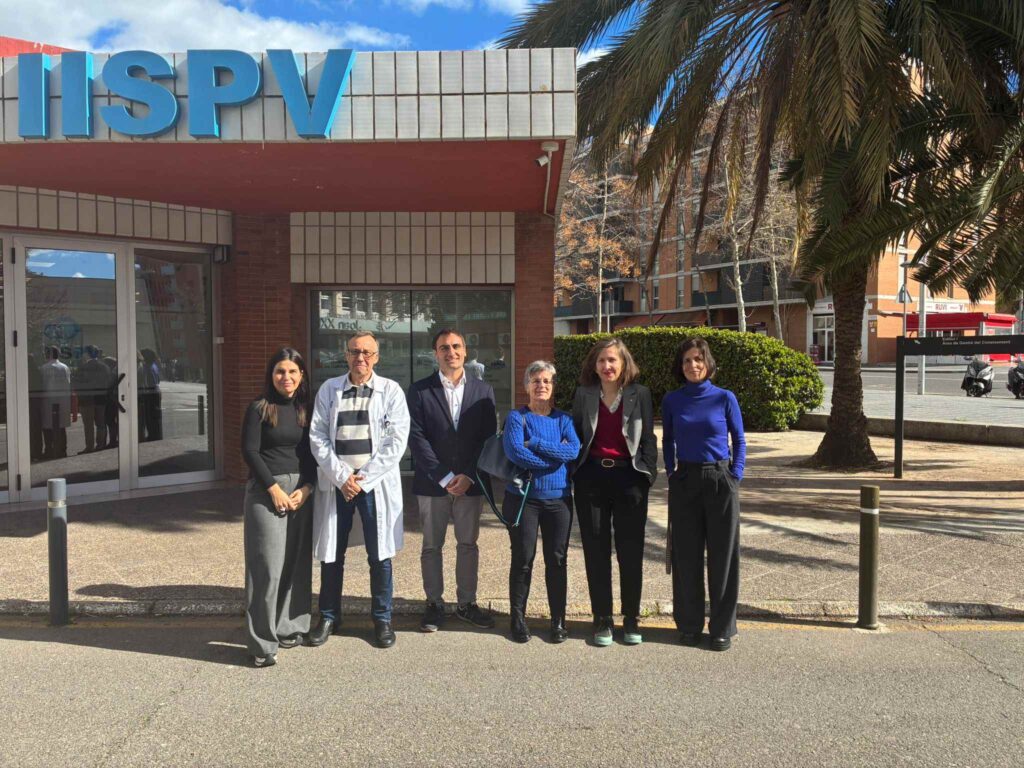
The Direcció General de Recerca (DGR) of the Govern de Catalunya has recently announced the start of a series of institutional visits to research centres across the region. One of the first visits in the area took place at the Southern Catalonia Institute of Biomedical Research (IRB CatSud, formerly IISPV). The meeting was held last Tuesday, 17 February, at the Institute’s headquarters in Tarragona.
The visit was attended by the Direcció General de Recerca, Teresa Sanchis, and the General Deputy of Recerca, Eva Pérez. Representing the Institute were the director, Joan Vendrell; the deputy director, Elisabet Vilella; the manager, Francesc López; and the head of the technical office, Elisabet Galve.
This action is part of a broader initiative aimed at strengthening direct knowledge of CERCA centres and of the different actors in the Catalan research system. The purpose of these meetings is to understand, directly and from the department’s perspective, the reality, needs, and strategic lines of each centre, with the intention of reinforcing institutional collaboration and improving public policies that support research.
For IRB CatSud, this visit is an opportunity to show the centre’s impact on the research ecosystem of Camp de Tarragona and Terres de l’Ebre, as well as to highlight its projects and research team.
A collaborative study from CIBERDEM-ISCIII shows that abdominal fat speeds up vascular ageing and increases the risk of long-term vascular complications, even before obesity appears.
A research team from the Parc Taulí Research and Innovation Institute (I3PT), together with the Pere Virgili Health Research Institute (IISPV) and the Hospital del Mar Research Institute (IMIM), has identified a clear link between abdominal fat accumulation and early vascular ageing in people with type 1 diabetes who have no previous cardiovascular disease.
The study was carried out with a group of 179 people with this condition, all evaluated at Parc Taulí University Hospital under the coordination of José Miguel González-Clemente, endocrinologist and head of the diabetes–cardiovascular risk group at I3PT, and Joan Vendrell, IISPV researcher, co-leader of the DIAMET research group and member of CIBERDEM-ISCIII.
Even though the participants had good control of blood glucose, blood pressure and lipid levels, around 10% showed signs of early vascular ageing. This is an important factor in the development of cardiovascular and microvascular complications that directly affect quality of life and life expectancy.
“In type 1 diabetes, insulin treatment is essential to control blood glucose, but over the years it can lead to gradual weight gain and a higher risk of complications,” González-Clemente explains. He adds that abdominal fat can accumulate before general obesity appears, especially visceral fat, which is metabolically active and strongly linked to artery damage. “This type of fat reduces arterial elasticity, a process related to the degradation of elastin, a key protein in the vascular wall. It may contribute to complications such as heart attack, stroke, circulation problems in the legs, or damage to the retina, kidneys and peripheral nerves.”
The waist-to-height ratio, a tool to detect early vascular ageing
To easily identify people at higher risk, the study highlights the waist-to-height ratio, calculated by dividing waist circumference by height, both in centimetres. The results show that a value of 0.56 or higher is linked to accelerated vascular ageing, measured through pulse wave velocity, a non-invasive technique that assesses arterial stiffness. “Almost all people with high pulse wave velocity had a waist-to-height ratio of 0.56 or more,” González-Clemente notes, adding that other common indicators, such as body mass index or waist-to-hip ratio, are less effective at detecting this risk.
The findings, published in Diabetes Research and Clinical Practice, underline the importance of preventing weight gain and monitoring abdominal fat as a preventive strategy. “Early control of this index would allow intervention before obesity develops, improve metabolic control and reduce the risk of long-term vascular complications,” he concludes.
The researchers point out that the next step is to confirm these results in larger cohorts with longer follow-up. The study also suggests that some drugs used in people with type 2 diabetes to reduce weight might also be useful in type 1 diabetes, although more clinical evidence is still needed.
The donation will support the Institute’s research lines on diabetes, especially those focused on prevention, diagnosis, and treatment
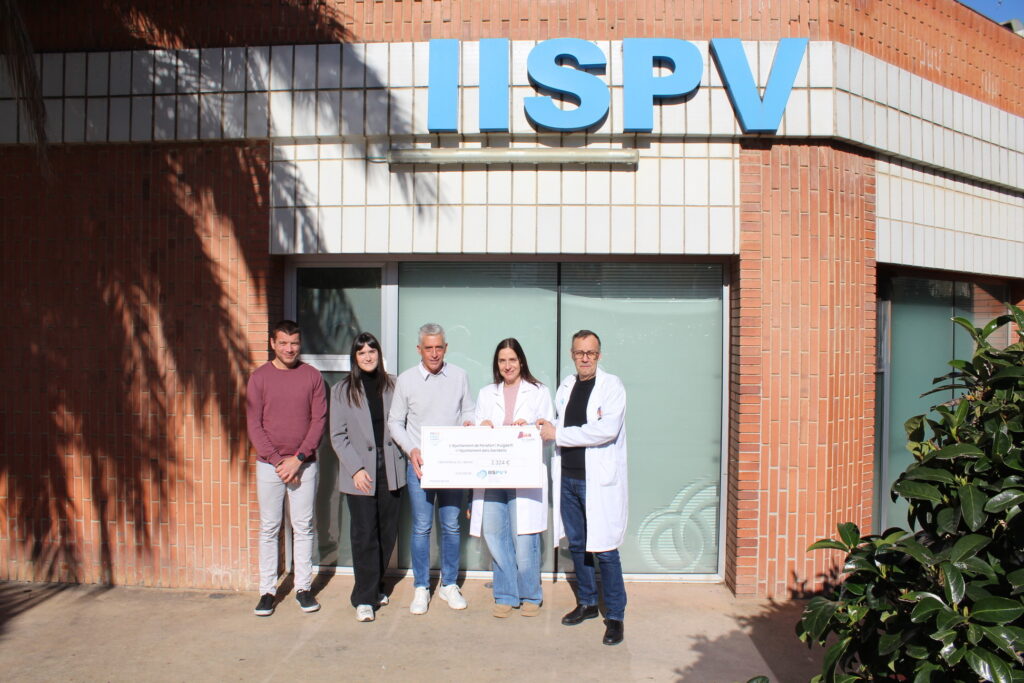
The town councils of Perafort and Puigdelfí and Els Garidells have donated the funds raised during the charity walk ‘Take a Step Against Diabetes’ to the Pere Virgili Health Research Institute (IISPV). The total amount, €2,324, will be used to support research on diabetes, particularly in the areas of prevention, diagnosis, and treatment of this and other metabolic diseases. The event, organised by both councils, took place on 23 November 2025 and celebrated its 10th edition, coinciding with the 20th anniversary of the Institute.
During the ceremony to hand over the symbolic cheque, several representatives of the organising institutions attended: the event’s promoter, Sergi Vernet; the Sports Councillor of Perafort, Xavi Prim; and the Housing and Social Welfare Councillor of Els Garidells, Marta Duque. Representing the IISPV were the director and leader of the Diabetes and Associated Metabolic Diseases Group (DIAMET), Joan Vendrell, and also DIAMET group leader, Sonia Fernández Veledo. The DIAMET group is the beneficiary of the funds, which will help continue its research projects in the field of diabetes.
The donation was made possible thanks to the participation of local residents and the support of organisations and businesses in the area. As highlighted during the cheque presentation by both the organising councils and IISPV representatives, this contribution “strengthens the collective commitment to diabetes research” and shows the “social awareness of a disease that has a major impact on the region”. The aim of the walk is not only to support research but also to promote healthy lifestyle habits.
Over its 10 editions, the charity walk ‘Take a Step Against Diabetes’ has raised a total of €11,000, which has been used to support ongoing diabetes research projects at the Institute.
