




Mamapop continues to strengthen its commitment to breast cancer research in Tarragona and this Tuesday donated a total of €30,150 to the Institut de Recerca Biomèdica Catalunya Sud (IRB CatSud). This amount comes from the profits generated by the concert held last November at the Palau Firal i de Congressos de Tarragona, plus €3,000 raised by Rotary Tarragona through the sale of the Cartes de Tarragona and the Tarratea activity.
Overall, Mamapop’s contribution to IRB CatSud throughout the three editions held in Tarragona has reached €84,725, an amount entirely dedicated to breast cancer research. Manel Simon, director and founder of Mamapop, thanked the public for their support and stated that “this new donation once again demonstrates the ability of music to become research and future opportunities”. He also highlighted that “this contribution strengthens the network of support that makes the project possible”.
Dr Joan Vendrell, director of IRB CatSud, expressed his gratitude for the commitment and efforts of the entire team behind Mamapop and stressed that research advances when society and institutions work together. In this regard, he explained that “the history of this charity project is a clear example of collective commitment to health, biomedical research and the Catalunya Sud territory, a commitment that has enabled us to launch a breast cancer research line that, unfortunately, addresses a disease with a high incidence in our society”.
The donation ceremony took place this Tuesday at Tarragona City Hall and was attended by the city’s mayor, Rubén Viñuales, who stated that “Tarragona is very proud to host and support a project that brings together so many people, organisations and companies around such an important cause. The public response once again shows that we are a supportive and committed city, capable of facing society’s major challenges together”.
He added: “Research is essential to make progress in prevention, treatments and the quality of life of patients. For this reason, Tarragona City Council will continue to support Mamapop, IRB CatSud and all initiatives that help make our region a benchmark in research, innovation and health.”
The event also served to present the theme of the next edition of the charity concert, which will premiere on 14 November 2026 at 8:00 p.m. at the Palau Firal i de Congressos de Tarragona. Mamapop will take another step forward with its eleventh show: Mamapop Disco Remember!, a spectacular journey through the greatest disco and dance hits that have marked several generations. The new production will feature a selection of iconic songs that will turn the theatre into a huge dance floor. Audiences will be able to relive hits by Boney M, Kool & The Gang, Earth, Wind & Fire, Chic, Madonna, The Jacksons, Wham!, Cyndi Lauper, George Michael, A-ha, Kylie Minogue, Lionel Richie & Diana Ross and Jennifer Rush, among many other artists who are part of our shared musical memory.
The new production will maintain the artistic and quality standards that have made Mamapop one of the leading charity initiatives, combining live music, stage design, audiovisual elements and a renewed production in support of a cause that continues to mobilise thousands of people. Tickets are already on sale through www.mamapop.cat and at FarmaTarraco Pharmacy.
Since its creation, Mamapop has contributed a total of €492,695 to research at IRB Lleida and IRB CatSud, becoming the leading source of private funding for breast cancer research in Catalonia. In this regard, Manel Simon reaffirmed his commitment to bringing the show to the Tarragona area and highlighted the importance of “continuing to support scientific research”.
Mamapop Tarragona is made possible thanks to the support of Fundación Repsol, Factor Energia, Tarragona City Council, the Palau Firal i de Congressos de Tarragona, the Diputació de Tarragona, the Port of Tarragona and Fundació La Caixa. It has also received support from several companies and organisations, including Club Rotary Tarragona, Club Bàsquet Tarragona and Nàstic de Tarragona.
Roger Martínez, a second-year Advertising Graphics student at the Tarragona Provincial Council School of Art and Design, is the winner of the ‘Olympus Scholarship’ 2026. The scholarship is based on the charity dinner that the Hotel Olympus Palace 4* in Salou organises every year and which this year is in support of the IRB CatSud for cardiology research.
Among the projects presented by the students within the Professional Project Management module, Roger Martínez’s poster was selected unanimously in first place by the jury. The 21-year-old student from Valls therefore receives a scholarship with a financial award of 500 euros and a full weekend stay for two people at the Hotel Olympus Palace 4*. Roger’s proposal is focused on “this poster represents a collage of the territory, where there are elements linked to the world of cardiology, healthy food and everything that helps to have a strong heart. All of this has helped me become aware of how important it is to have good health,” explained the winner.
Cardiology Research at IRB CatSud
IRB CatSud has more than 40 research groups. One of them is the Tarragona Translational and Clinical Cardiology Research Group, which carries out its activity at the Joan XXIII University Hospital in Tarragona and is the recipient of the funds raised in this year’s edition of the Hotel Olympus Palace charity dinner. Its mission is to investigate and innovate in the field of cardiovascular diseases in order to develop strategies that allow more personalised treatments and improve patients’ prognosis.
More specifically, this group studies how to identify and use molecules or genes that help detect and better understand heart diseases. It also works on evaluating patient characteristics that may contribute to increasing the severity of different cardiovascular diseases (myocardial infarction, heart failure, sudden death, etc.), with the aim of improving prognosis. In addition, it analyses why some people respond differently to certain medicines and how to improve treatment strategies so that they are more effective and safer. It also investigates minimally invasive techniques to treat coronary and valvular diseases, correct arrhythmias and optimise the functioning of pacemakers and defibrillators, among other lines of work.
Award Ceremony at the SUMMIT Rooftop
The panoramic terrace of the Hotel Olympus Palace 4* hosted the formal ceremony for the presentation of the ‘Olympus Scholarship’. The members of the jury, the Hotel Olympus Palace 4* team and the students, accompanied by friends and relatives, gathered to learn the final decision. In addition to the winner, it was also announced that the posters presented by Alba Pocurull and Andrea Hernández were finalists jointly. Both receive a one-night stay for two people at the Hotel Olympus Palace 4*. The hotel also rewarded the effort of the other students by giving them a day at SUMMIT for two people including a meal during this summer.
The representative of the ownership of Hotel Olympus, Gil Cristià, highlighted during his speech “our gratitude to the participating students for their work and dedication. I would also like to thank the management and teaching staff of the Tarragona Provincial Council School of Art and Design for their involvement and the dedication of the jury.”
The Tarragona Provincial Council School of Art and Design emphasised that “this project has been a real adventure, a process full of emotions. A challenge that we faced from the very beginning with shared enthusiasm. We felt very welcome and supported, and we want to thank you,” underlined Laura Casas, Itziar Solla, Silvia Iturria, Núria Anguren i Judith Guinovart, teachers from the Escola d’Art i Disseny of Diputació de Tarragona, of Pau Brull and Esther Fernández, on behalf of Rotary Club Tarragona, of Joan Vendrell, director from l’Institut de Recerca Biomèdica CatSud and of Maira Isaura Rojas, Beca Olympus 2024 winner.
The 2026 Charity Dinner will be held at Hotel Olympus Palace 4* on Thursday, 1 October at 7:00 p.m. All funds raised will be entirely allocated to research into the prevention of cardiovascular diseases conducted by the Institut de Recerca Biomèdica CatSud and Joan XXIII Hospital in Tarragona.
This week, from June 15 to 18, Montbrió del Camp hosts the 43rd International Symposium on Diabetes and Nutrition (abbreviated as DNSG from the English initials of the organizing body, Diabetes and Nutrition Study Group), which is currently chaired by Hana Kahleova, from the United States. This symposium is a global meeting point for research in diabetes and nutrition and at the local level, this year, it involves the participation of the Southern Catalonia Biomedical Research Institute – IRBCatSud and the Universitat Rovira i Virgili (URV).
The aim of this symposium is to share knowledge regarding research in nutrition, diabetes and the prevention of chronic diseases. It should be noted that the DNSG group is a reference when it comes to developing recommendations on nutrition at the European level and based on diabetes. “That DNSG 2026 is being held in our region and has reached full capacity is magnificent news for our scientific and healthcare institutions”, highlights the organizing committee, made up of the Vice-President of the Symposium and member of the local organizing committee of the congress Jordi Salas; the director of IRB CatSud, Joan Vendrell; and the professor of Nutrition and Food Science at the URV Nancy Babio.
This edition, on the other hand, features a record number of 118 scientific presentations, which address aspects to be considered in the fields of obesity, diabetes and precision medicine, among many other topics.
One of the elements that makes this edition stand out is the collaboration of a local Scientific Committee made up of representatives from the main Spanish scientific societies and research networks related to diabetes, nutrition, obesity and metabolic health. Another relevant factor is that, among the most prominent scientists participating in the congress, is Dr. Frank Hu, Chair of the Department of Nutrition and Professor of Nutrition and Epidemiology at Harvard University.
▪ This is the first event of this kind in Spain and it will be held on 17 June at the Pere Mata University Hospital
▪ The national mental health research network, CIBERSAM, is also involved in organising the event
Sharing knowledge, exchanging research lines and promoting new scientific collaborations are the main goals of the first national workshop on genetics in psychiatry. The event will take place at the Pere Mata University Hospital and will bring together research groups from across Spain specialised in the genetics of psychiatric disorders.
The meeting, which will be held on 17 June, will gather highly competitive research groups at an international level. Most of them are part of the CIBERSAM network (Biomedical Research Networking Center in Mental Health), funded by the Carlos III Health Institute, and of the international consortium Psychiatric Genomics Consortium.
The workshop has been designed with a dynamic and participatory format. It will combine short presentations from the different teams, where they will present their structure, objectives and research lines. In addition, there will be workshops aimed at identifying common priorities and opportunities for joint work. The latest advances in genetics in psychiatry achieved by national groups will also be presented.
One of the key elements of the workshop will be the collective development of future proposals, including the possible creation of a stable network or working group on genetics in psychiatry. It will also promote shared initiatives in areas such as translational research and knowledge transfer to clinical practice and society.
Genetics in psychiatry is a field that has experienced a real expansion of knowledge in recent years, driven by advances in genomic technologies and the analysis of large data sets. These developments have made it possible to identify genetic variants associated with disorders such as schizophrenia, bipolar disorder or autism, improving the understanding of their biological basis and opening the door to more precise and personalised strategies for prevention and treatment.
With this first edition, the organisers aim to establish the basis for a regular reference meeting that will help strengthen collaboration between research groups and increase the impact of mental health research. Here, the programme.
Southern Catalonia Biomedical Research Institute (IRBCatSud, formerly IISPV) takes part in the Catalunya Sud Cancer Center, a new oncology structure promoted by the Hospital Universitari Sant Joan de Reus that has recently been accredited by the Organisation of European Cancer Institutes (OECI), one of the leading European networks of excellence in oncology.
The Catalunya Sud Cancer Center has been created as an integrated model of clinical care, biomedical research and training, with the aim of improving coordination and the quality of care for people with cancer in southern Catalonia. The project is led by the Hospital Universitari Sant Joan de Reus, with the participation of IRB CatSud and the Universitat Rovira i Virgili, strengthening collaboration between healthcare, research and education.
The OECI accreditation recognises the Catalunya Sud Cancer Center as a member of the European network of oncology centres of excellence, made up of institutions that meet high international standards in healthcare, research and innovation. This recognition consolidates southern Catalonia’s position on the European oncology map and reinforces the role of biomedical research as a key part of an integrated oncology care model.
The researcher Jordi Gracia-Sancho, an international reference in the study of liver diseases, is joining the Institut d’Investigació Sanitària Pere Virgili (IISPV) as the head of the new hepatology research group. His aim is to strengthen biomedical research in the region and position it as a centre of excellence in digestive health. With a strong scientific background and a clear translational outlook, Gracia-Sancho will lead a team focused on generating knowledge with a direct impact on clinical practice and on patients’ quality of life.
Graduated in Biochemistry from the Universitat Rovira i Virgili (URV) and with a PhD in Medicine from the Universitat de Barcelona (UB), Jordi Gracia-Sancho completed his training with a postdoctoral stay at Harvard University (Boston, USA). Later, he obtained a Ramón y Cajal contract and progressed to Group Leader at the Institut d’Investigacions Biomèdiques August Pi i Sunyer (IDIBAPS), one of the main biomedical research centres in the country. He is currently also the Scientific Director of CIBEREHD (ISCIII), where he coordinates and promotes cooperative research on liver and digestive diseases at the national level.
His research focuses on the vascular pathophysiology of the liver, with particular attention to the role of sinusoidal cells and their interactions in acute and chronic liver diseases, as well as in ageing-related processes. Throughout his career, he has published more than 155 scientific articles in peer-reviewed international journals and currently serves as Editor-in-Chief of npj Gut and Liver, a journal from the Nature group, which further highlights his scientific leadership.
The new group led by Gracia-Sancho aims to understand the biological and molecular mechanisms behind the development and progression of diseases such as hepatic steatosis, steatohepatitis or cirrhosis, conditions that are becoming increasingly common and have a strong social and health impact.
Among its goals are the identification of new therapeutic targets, the development of innovative pharmacological strategies and progress in precision medicine in hepatology through the detection of biomarkers that help classify patients better and predict their response to treatments.
To achieve these objectives, the group will work with a multidisciplinary and translational approach, integrating experimental models, analysis of human samples, omics technologies and close collaboration with clinical professionals from l’IRBCatSud. This synergy will accelerate the transfer of research results from the laboratory to patient care.
In addition to his scientific activity, Jordi Gracia-Sancho is strongly committed to training young researchers. He has supervised 15 doctoral theses, co-directs the Màster en Recerca Translacional en Malalties Hepàtiques i Digestives at the Universitat Complutense de Madrid, and participates as a guest lecturer in several European universities.
He also co-organises various international scientific dissemination and training initiatives, such as the LiverSeminars programme, as well as symposia supported by leading global hepatology societies such as EASL, APASL or AASLD. He has been an invited speaker at over a hundred international conferences and is currently President of the International Society for Hepatic Sinusoidal Research (ISHSR).
In the field of innovation, Gracia-Sancho is the author of four patents, has contributed to the creation of two biomedical spin-offs and has led projects aimed at developing new diagnostic and therapeutic technologies, reinforcing his strong commitment to transferring knowledge into the healthcare system and productive sector.
His career has been recognised with multiple awards. In 2016, he became the first Spanish researcher to receive the Emerging Leader Award from the European Association for the Study of the Liver (EASL), and in 2023 he was named Fellow of the American Association for the Study of Liver Diseases (FAASLD), an honour reserved for a very small number of top-level scientists.
With his incorporation as group leader, Jordi Gracia-Sancho is committed to a research model that is collaborative, open and deeply connected to the territory, with the aim of to strengthen local scientific capacities, attract and retain talent, and take part in leading national and international networks. A vision that places scientific knowledge as a driving force for transformation, innovation, and the improvement of citizens’ health.
The Institut d’Investigació Sanitària Pere Virgili (IISPV) and La Lliga Contra el Càncer de les Comarques de Tarragona i Terres de l’Ebre have signed a framework agreement that strengthens the commitment of both institutions to research, prevention and public awareness in the field of health and the fight against cancer. The signing takes place on the eve of World Cancer Day, which is celebrated tomorrow, 4 February, a day that highlights the importance of joining efforts to reduce the impact of this disease on society.
The agreement creates a stable cooperation framework lasting four years, renewable annually for another four years. This will allow the development of research projects and activities aimed at improving the health and quality of life of people affected by this disease. In this context, La Lliga will provide yearly financial support to the IISPV for research projects and cancer prevention initiatives. The first planned contribution is 68,000 euros.
Joan Vendrell, director of the IISPV, stated that this collaboration “is an opportunity to strengthen cancer research carried out in our territory and to move forward with projects that have a direct impact on people’s health”. He added that “working together with an organisation with such a strong background in prevention and awareness, like La Lliga Contra el Càncer, allows us to make significant progress in the cancer research we do at our Institut”.
On the other hand, Agustina Sirgo, president of La Lliga Contra el Càncer de les Comarques de Tarragona i Terres de l’Ebre, emphasised that “research is one of the most powerful tools to improve the lives of people living with cancer. This agreement helps us join forces with a leading centre like the IISPV and ensures that the support of local citizens becomes progress that directly benefits the patients in our counties. Supporting research is a responsibility we take on with pride and determination. We want every patient and every family to know that they are not alone, and that we will continue working so that the future can be better.”
The alliance between the two institutions also includes public awareness actions aimed at fostering healthy habits and promoting early detection, which is one of the key factors in improving cancer survival.
The Institute of Biomedical Research of Southern Catalonia (IRB CatSud, formerly IISPV) joins once again the celebration of the International Day of Women and Girls in Science, held this Wednesday, February 11, with the aim of making female talent visible, acknowledging their role in the field of biomedical research, and fostering scientific vocations among younger generations.
IRB CatSud currently has a workforce made up mostly of women, who represent approximately 68% of all professionals linked to the Institute—clear evidence of the strong female presence across research, technical, and administrative activities.
In parallel, regarding the gender composition of governance and advisory bodies—such as the Executive Advisory Committee and the Social Council—women represent 52%. This reflects their representation in these governance spaces, in line with the criteria of balance and representativeness that guide the Institute’s operations.
IRB CatSud also has a significant presence of women in its research teams. Female researchers represent an essential part of the scientific staff and lead competitive projects in fields such as mental health, nutrition, metabolic diseases, oncology, and environmental health.
These data show that more and more women are working in the scientific field. “Women’s brains function differently from men’s—not better or worse—but it is good and necessary for the world of science to benefit from the way the female brain analyzes problems and seeks solutions,” says Elisabet Vilella, Deputy Director of IRB CatSud and researcher in the field of genetics and mental health.
On this February 11, IRB CatSud aims to strengthen its commitment to equal opportunities and the promotion of female talent, valuing the careers of its female researchers and helping to create new role models for future scientists.
The grants, with more than €270,000 in funding, support advanced projects in personalized radiotherapy and artificial intelligence. A third grant is aimed at specialized training in molecular oncology
The Spanish Association Against Cancer in Tarragona presented on Thursday, 19 February, the three grants awarded for the 2025 call. These grants show a strong commitment to cancer research and to the goal of reaching a 70% cancer survival rate by 2030.
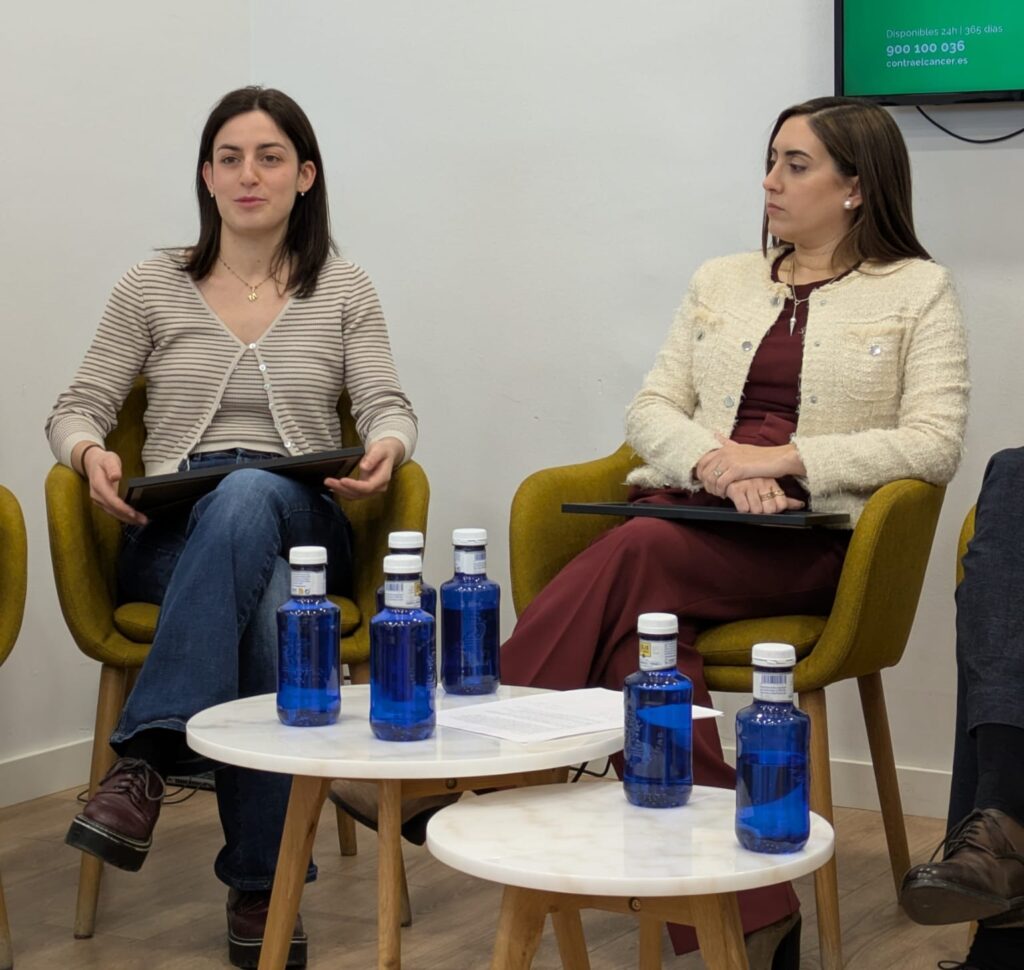
Two of the funded researchers work at the Institute of Biomedical Research of Southern Catalonia (IRB CatSud, formerly IISPV). They lead projects that combine technology, innovation, and clinical impact: Dr Bárbara Antonia Malavé and Marta Canela.
Dr Bárbara Antonia Malavé has received the Clinic Junior Grant AECC 2025, supporting a project focused on improving radiotherapy treatment for prostate cancer. The project uses advanced biomarkers and artificial intelligence to adapt treatments to each patient. The grant provides €154,000 over four years.
Also at IRB CatSud, Marta Canela has received the AECC Tarragona Predoctoral Grant 2025. Her research combines medical imaging and blood analysis to predict how patients with lung cancer will respond to radiotherapy. The grant provides €110,660 over four years.
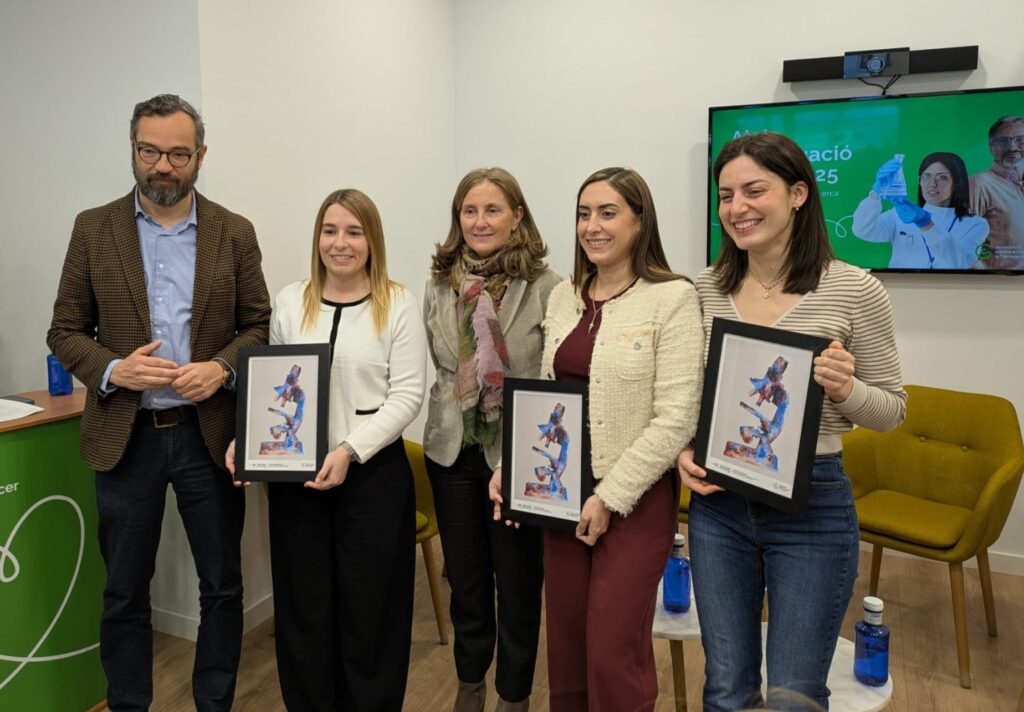
The third grant has been awarded to Maria Guirro, who will receive the Clinic Training Grant AECC 2025. The €7,100 contribution will allow her to complete the Master’s Degree in Molecular Oncology (MOM).
This action is part of a series of meetings that the Departament is carrying out in CERCA centres, with the aim of learning about their situation first-hand
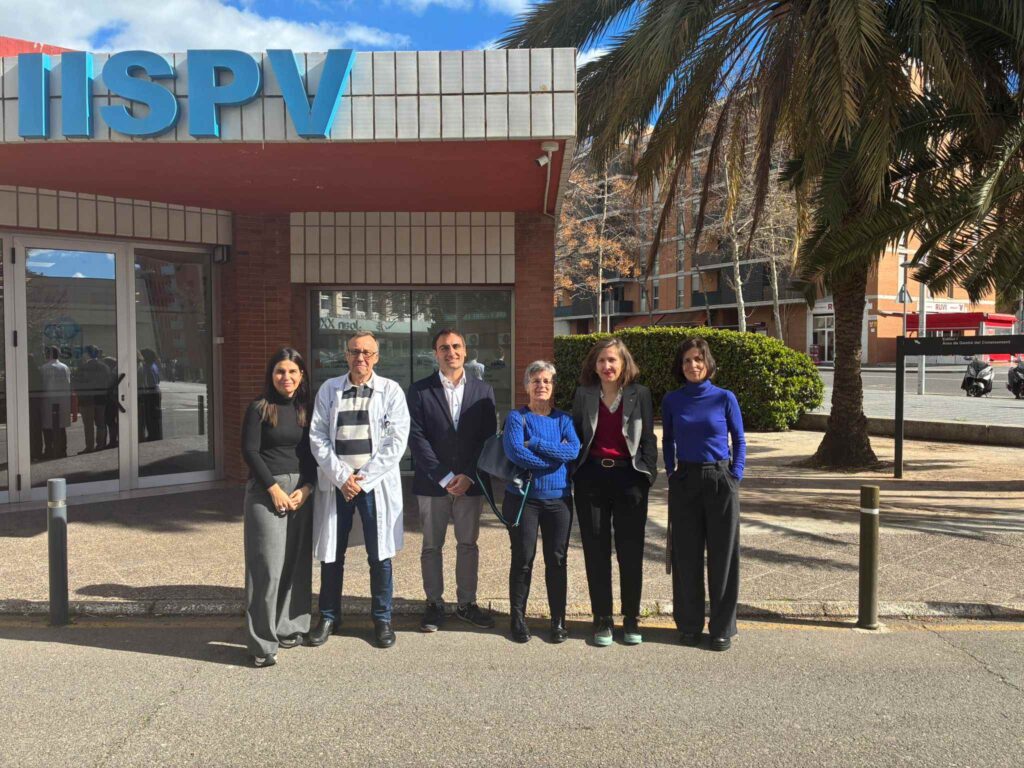
The Direcció General de Recerca (DGR) of the Govern de Catalunya has recently announced the start of a series of institutional visits to research centres across the region. One of the first visits in the area took place at the Southern Catalonia Institute of Biomedical Research (IRB CatSud, formerly IISPV). The meeting was held last Tuesday, 17 February, at the Institute’s headquarters in Tarragona.
The visit was attended by the Direcció General de Recerca, Teresa Sanchis, and the General Deputy of Recerca, Eva Pérez. Representing the Institute were the director, Joan Vendrell; the deputy director, Elisabet Vilella; the manager, Francesc López; and the head of the technical office, Elisabet Galve.
This action is part of a broader initiative aimed at strengthening direct knowledge of CERCA centres and of the different actors in the Catalan research system. The purpose of these meetings is to understand, directly and from the department’s perspective, the reality, needs, and strategic lines of each centre, with the intention of reinforcing institutional collaboration and improving public policies that support research.
For IRB CatSud, this visit is an opportunity to show the centre’s impact on the research ecosystem of Camp de Tarragona and Terres de l’Ebre, as well as to highlight its projects and research team.
