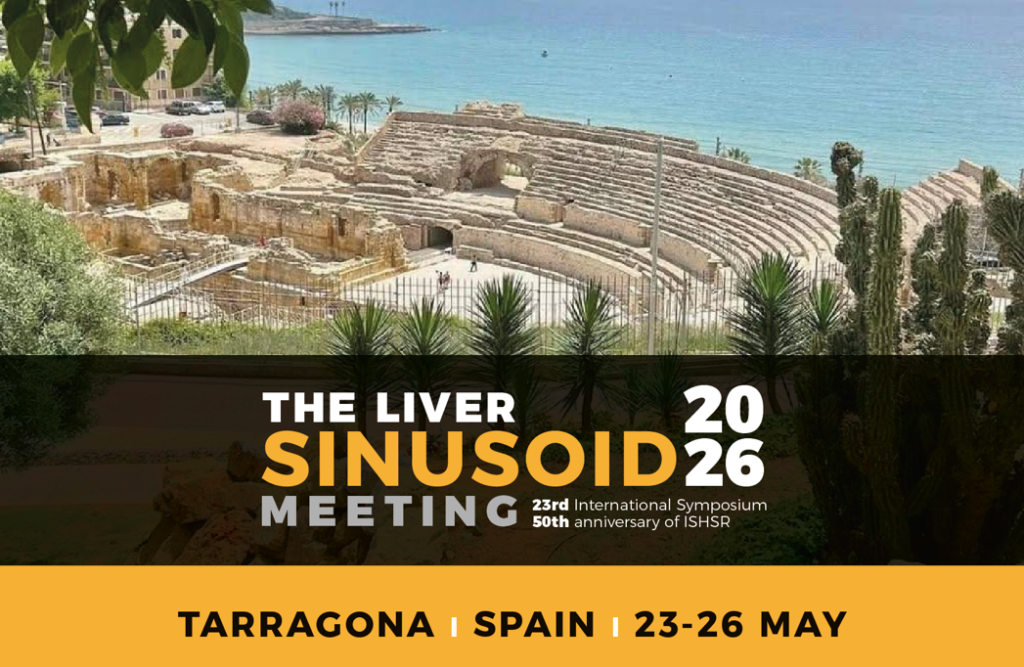

Tarragona hosted the 23rd Liver Sinusoid Meeting 2026 from May 22 to 26. This is one of the main international meetings in the field of liver blood vessel biology. The congress brought together around 200 researchers and clinicians from different countries and placed the city and its biomedical research ecosystem at the center of the international scientific scene.
Jordi Gracia-Sancho, a researcher at IRB CatSud and head of the Liver Research Unit, was part of the organising committee and one of the main promoters of the meeting, being also the president of the International Society for Hepatic Sinusoidal Research (ISHSR). The event also included the participation of Sonia Fernández-Veledo, co-leader of the Diabetes and Associated Metabolic Diseases research group (DIAMET), highlighting the important role of local researchers in the scientific coordination of the congress.
Over five days, participants shared the latest advances in liver vascular biology, inflammation, immunity and fibrosis, as well as new findings on liver diseases. The programme included talks by international experts, oral presentations and poster sessions, encouraging scientific discussion and new collaborations.
Within the congress, the DIAMET group from IRB CatSud had an active role with several scientific contributions. Sonia Fernández-Veledo chaired a session on stellate cell biology and fibrosis. Predoctoral researcher Laura Salmerón gave an oral presentation about how certain liver mechanisms influence immune response. Anna Marsal also presented a poster on how these mechanisms affect liver cell function and their response to nutrients.
One of the most important moments of the meeting was the celebration of the 50th anniversary of the International Society for Hepatic Sinusoidal Research (ISHSR), which reviewed 50 years of progress in this field. Key initiatives for the future were also presented, including an international agreement on the use of new experimental models in liver research.
International visibility and local impact
Beyond its scientific importance, the congress helped promote Tarragona as a city able to host large international events, combining excellent research with culture, heritage and gastronomy. The social programme included cultural activities and visits so participants could explore the region.
At the same time, the organisers promoted outreach activities through workshops in local schools, bringing biomedical research closer to students and encouraging interest in science.
This edition also created new collaborations, strengthening the role of Tarragona and IRB CatSud in international liver research.
Scientific outreach in local schools
As part of the activities before the congress, researchers from IRB CatSud, CIBER and CSIC, together with members of the Scientific Committee, organised outreach actions to bring biomedical research and liver science closer to the local community.
They held four workshops for secondary school students (3rd year ESO) from Vedruna Tarragona and La Salle Torreforta. These sessions explained the liver, health and research in a simple and interactive way.
This initiative helped increase students’ interest in science and highlighted the importance of research in understanding and treating liver diseases, while strengthening the connection between scientists and the local community. The workshops were led by researchers involved in the congress, including Jordi Gracia-Sancho, Anna Marsal, Anabel Fernández-Iglesias and Anna Moles.
The congress was supported by several institutions, including Tarragona City Council, Tarragona Provincial Council, the Spanish Ministry of Science, Innovation and Universities, and the Government of Catalonia.
After Tarragona, the next edition of the Liver Sinusoid Meeting will take place in Tokyo in October 2028.
This action is part of a series of meetings that the Departament is carrying out in CERCA centres, with the aim of learning about their situation first-hand
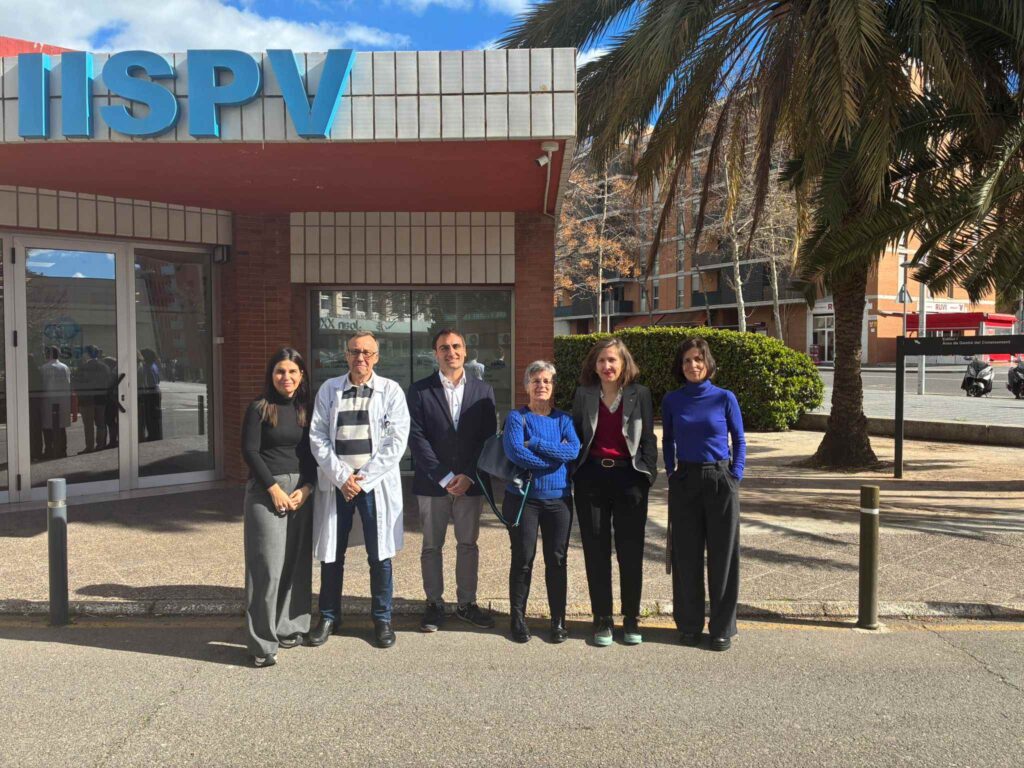
The Direcció General de Recerca (DGR) of the Govern de Catalunya has recently announced the start of a series of institutional visits to research centres across the region. One of the first visits in the area took place at the Southern Catalonia Institute of Biomedical Research (IRB CatSud, formerly IISPV). The meeting was held last Tuesday, 17 February, at the Institute’s headquarters in Tarragona.
The visit was attended by the Direcció General de Recerca, Teresa Sanchis, and the General Deputy of Recerca, Eva Pérez. Representing the Institute were the director, Joan Vendrell; the deputy director, Elisabet Vilella; the manager, Francesc López; and the head of the technical office, Elisabet Galve.
This action is part of a broader initiative aimed at strengthening direct knowledge of CERCA centres and of the different actors in the Catalan research system. The purpose of these meetings is to understand, directly and from the department’s perspective, the reality, needs, and strategic lines of each centre, with the intention of reinforcing institutional collaboration and improving public policies that support research.
For IRB CatSud, this visit is an opportunity to show the centre’s impact on the research ecosystem of Camp de Tarragona and Terres de l’Ebre, as well as to highlight its projects and research team.
Scientists from around the world will gather to discuss the liver sinusoid, a specialized type of blood capillary found in the liver, and its role in ageing, regeneration, and disease