



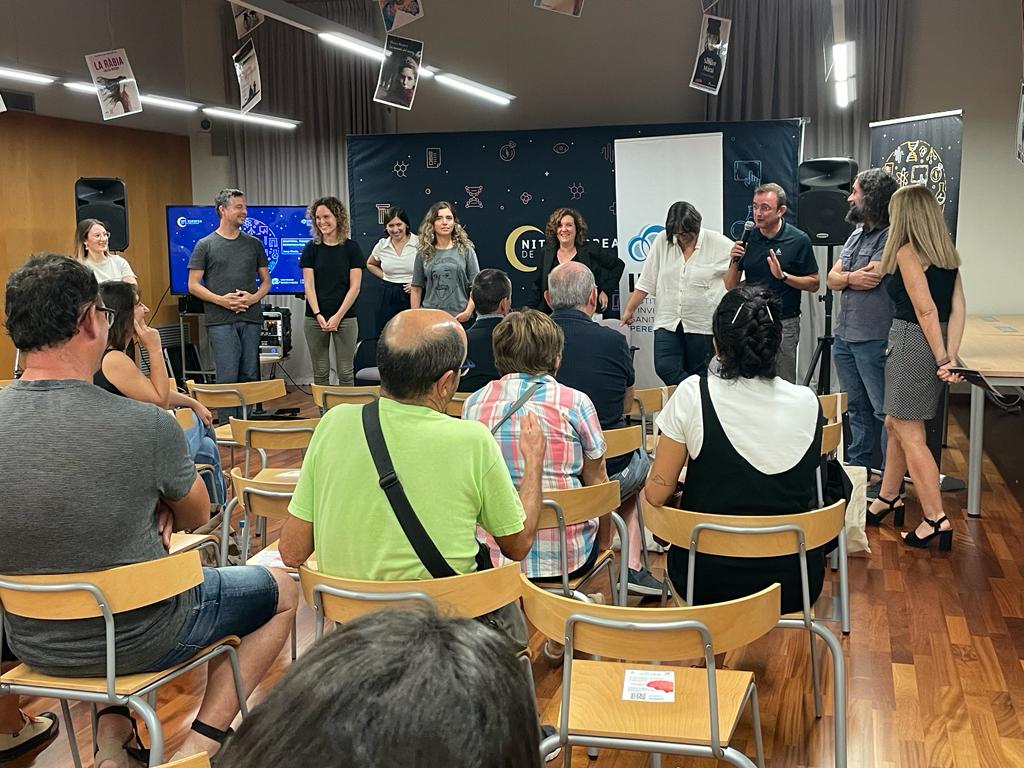
The Castell del Cambrer in Reus hosted, this past Monday, September 21, a new edition of the informative micro-talks ‘Research for change’, organized within the framework of the European Research Night by the IRB CatSud and with the collaboration of the Rovira i Virgili University and the Reus City Council. The session brought together nearly 80 people, who were able to discover in an enjoyable and accessible way some of the research projects that are carried out in the territory.
Throughout the afternoon, researchers from IRB CatSud, ICIQ, ICAC, IPHES and the Rovira i Virgili University offered short talks on topics as diverse as cardiovascular health, heritage, sustainability and nanoscience, bringing research closer to the public with plain and understandable language.
The activity is part of the European Research Night program in Tarragona, an initiative that aims to bring science and its protagonists closer to society as a whole and show the impact of research on everyday life.
During menopause, significant biological changes occur that can influence cardiovascular health. Do you know what they are? And have you ever wondered if we could learn the trick that plants use to generate energy? These and other questions will be addressed by researchers from the four research centers in the region and the Rovira i Virgili University (URV) next Monday, September 21 at the Castell del Cambrer in Reus, starting at 6 p.m.
All of this will take place during another edition of the ‘Research for Change’ micro-talks, one of the previous events for the European Research Night in 2026. This session of short interventions is organized by the Institute for Biomedical Research in Southern Catalonia (IRB CatSud) in collaboration with the URV and the Reus City Council. The speakers who will participate in the meeting represent the research centers IRB CatSud, ICIQ, IPHES and ICAC, and there will also be some from the URV.
Cardiovascular health, nutrition, microbiota, nanoscience, archaeology and heritage will be the main topics of this year’s interventions. The talks, lasting around 10 minutes, have an agile format, and the speakers use plain, informative and accessible language. This approach gives the event a close, relaxed and participatory character, as the audience is encouraged to intervene, share opinions and ask questions.
The objective of the meeting is for the different participating research centers to bring the science they develop closer to the public, making their studies and projects known in a way that is more understandable and accessible to everyone.
The speakers and topics of the talks will be the following:
1. Menopause and cardiovascular health: understanding the changes to gain health – Olivia Burton (IRB CatSud).
2. The diet that made us human – Marina Lozano Ruiz (IPHES-CERCA).
3. Reinventing photosynthesis with nanoscience – Carla Casadevall Serrano (URV, ICIQ).
4. Seeds that explain landscapes: agriculture and daily life in ancient Greece – Marina Daniel Pena (ICAC).
5. The uses of memory and heritage: the heritage management of Francoist monuments – Berta Pla Romero (URV).
6. An archaeologist sifting through the trash – Maria Joana Gabucio Vilarrasa (URV).
7. Metabolites, microbiota and circadian rhythms: the three vertices of a vicious circle that promotes health (or disease) – Aleix Ribas Latre (IRB CatSud).
European Research Night events
The European Research Night is an informative initiative that has its central activity with the scientific workshop fair, which will take place in Plaça Corsini in Tarragona on the afternoon of Friday 25 and the morning of Saturday 26 September . Between the two days, 50 workshops will make available to attendees highly experimental proposals from different fields of knowledge, to bring science, in its variety of disciplines, closer to young and old in a fun and accessible way.
The European Research Night is a public scientific dissemination event that takes place simultaneously every year in 300 cities in 30 countries on the European continent. Since 2018, the URV has been organizing this initiative in the Tarragona region, which has been growing and consolidating over the past nine years and which in the previous edition had the participation of thousands of people throughout the region. The aim of the European Research Night is to bring research and its protagonists closer to audiences of all ages and to publicize research and innovation in plain and understandable language.
Detailed information with all the activities of the European Research Night can be consulted on the website tarragona.nitdelarecerca.cat
Seven researchers spoke about studies in health, energy and the environment, and their impact on everyday life. This Friday afternoon and Saturday morning, a science workshop fair will take place at Corsini Square in Tarragona, the main event of the Researchers’ Night
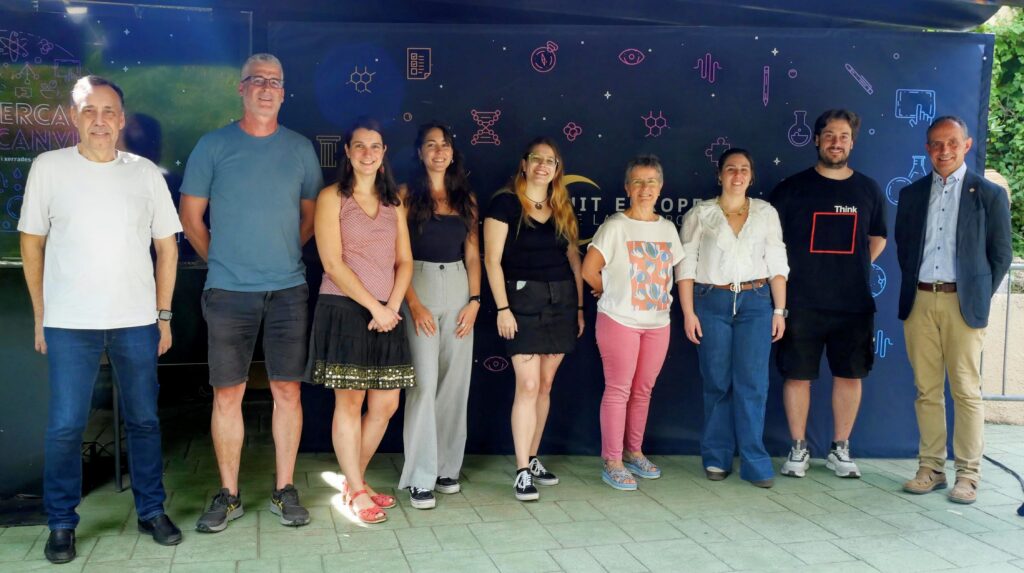
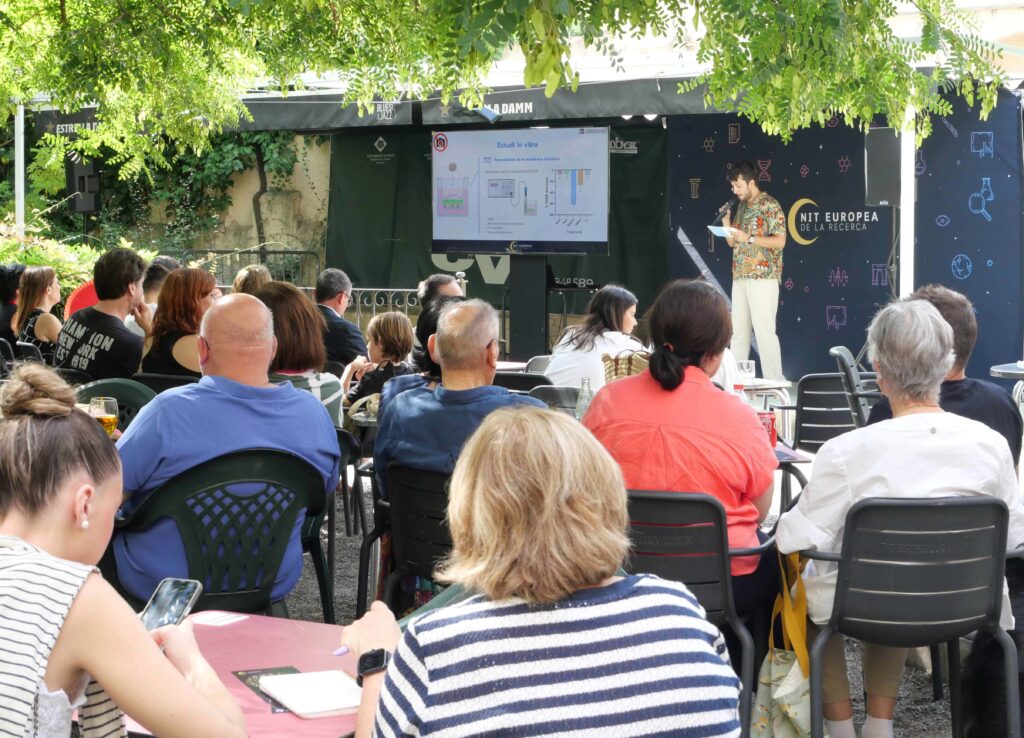
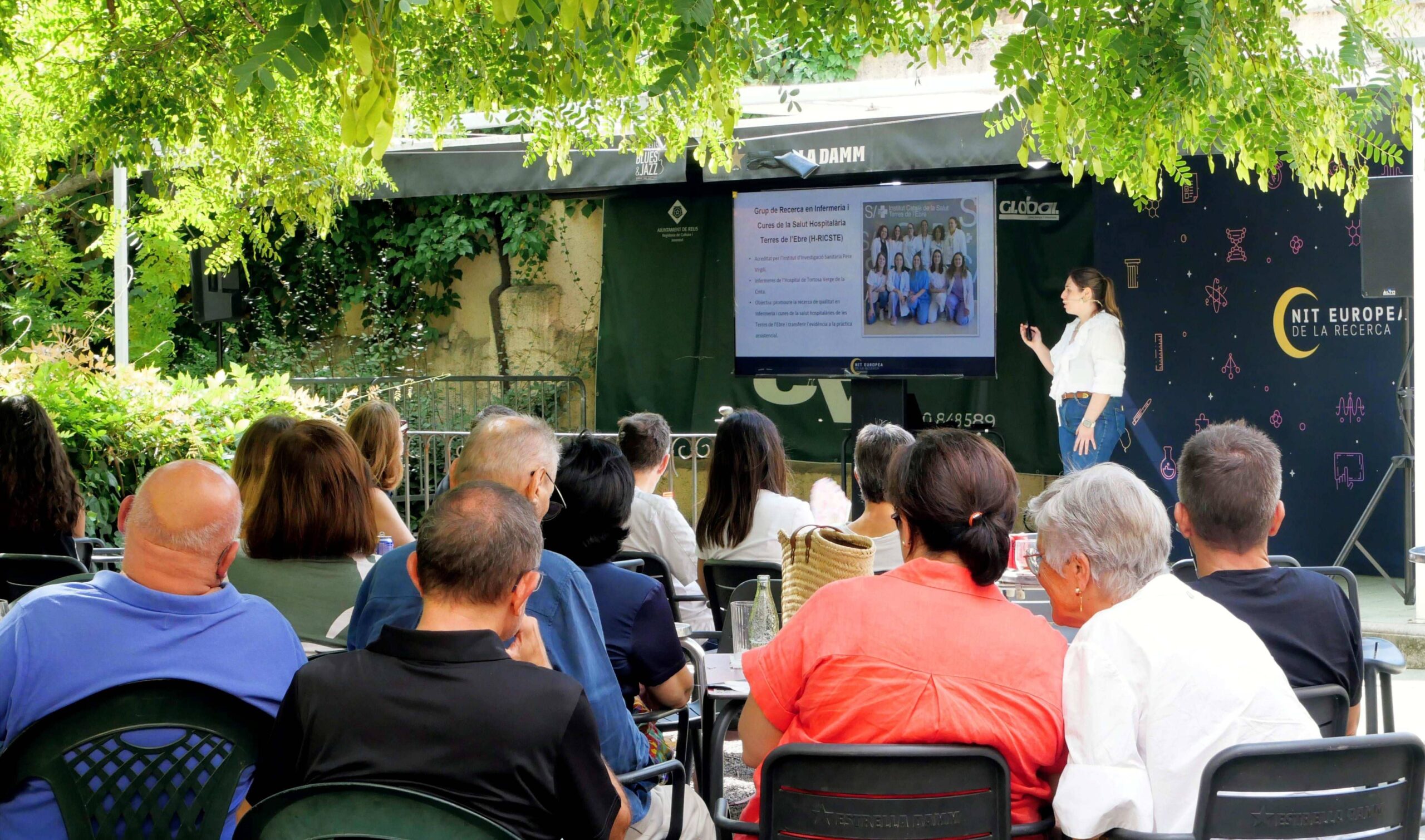
This Saturday, Racó de la Palma in Reus became a centre of scientific knowledge during the micro-talks “Research for Change”, a pre-event of the European Researchers’ Night attended by around eighty people. The event, organised by the Pere Virgili Health Research Institute (IISPV) with support from the Rovira i Virgili University (URV), brought together seven researchers from different local research centres who shared innovative advances in health, energy and environmental topics.
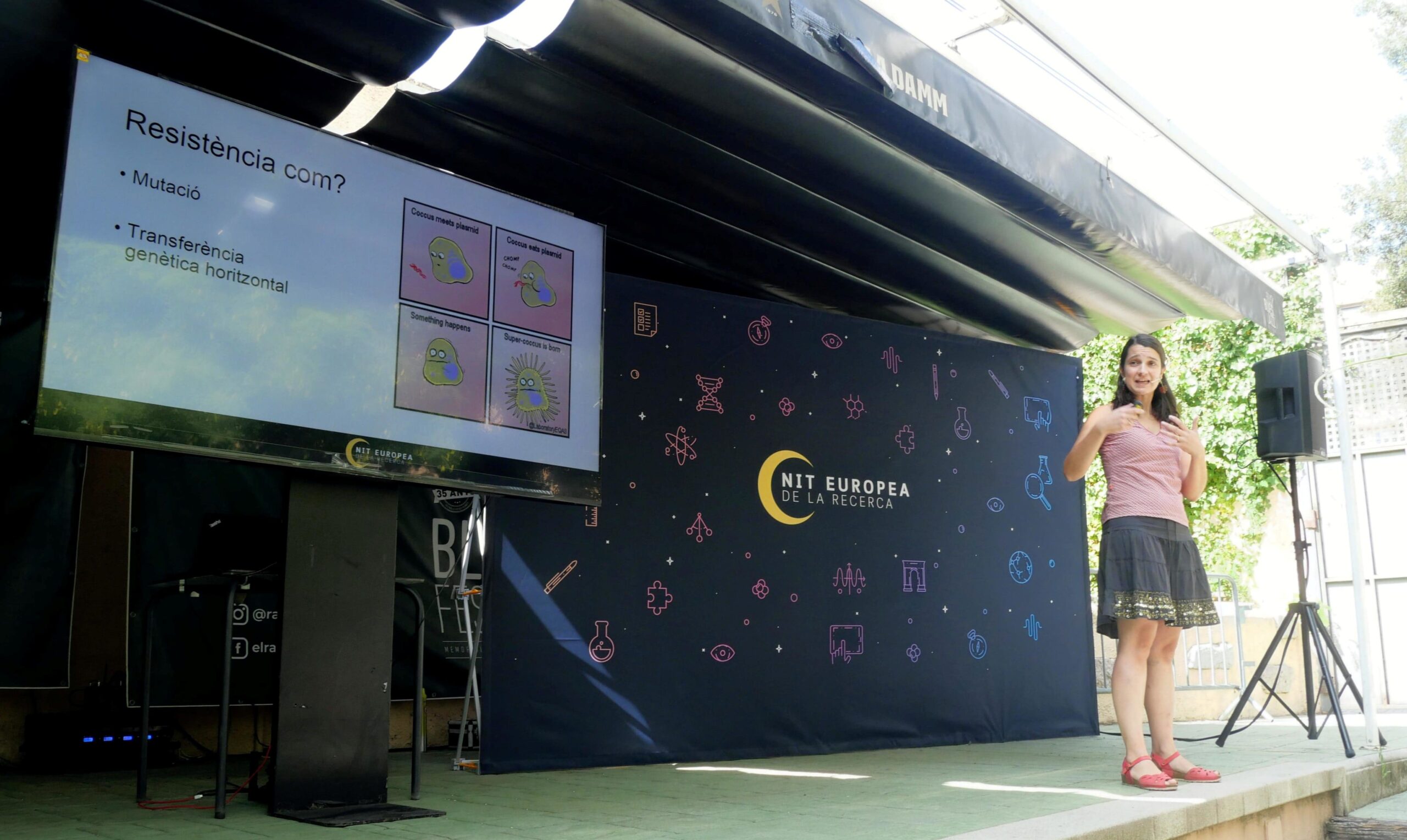
With a dynamic and informative format, each talk lasted ten minutes and explained, in a practical way, the results of scientific studies and how they affect people’s lives. For example, Cèlia Uroz, a researcher from URV, said that people ingest 20,000 microplastic particles per year, which is equal to one credit card per week, and spoke about their effects on the intestine. Marta Llorens, from the Catalan Institute of Chemical Research (ICIQ), explained how antibiotics work in the body and why it is important to take them carefully and follow the doctor’s instructions.
In the field of mental health, Elisabet Vilella, researcher at IISPV and the Pere Mata Institute, said that one in four people suffers from a mental health problem during their lifetime. She also talked about how mental health issues and psychiatric disorders can vary depending on age or gender.
The micro-talks highlighted the value of local research and its direct impact on daily life. There was also good interaction with the audience, who had the chance to ask questions to the researchers about the topics discussed.
The European Research Night events continue
These micro-talks were a prelude to European Research Night, an educational initiative centered around a science fair, which will take place on the afternoon of September 26 and the morning of September 27 in Tarragona’s Plaza Corsini, with the participation of more than 200 researchers from the URV and research institutes. Another preliminary activity is the family workshop “Much more than aesthetics,” on how obesity and diabetes affect the body, which will take place at the Viding Sant Jordi sports center in Tarragona.
It will also visit secondary schools in the Tarragona area through informative talks and will return once again to Terres de l’Ebre with a science workshop fair to be held on October 3 in Tortosa’s Town Hall Square.
European Research Night is a major educational event held simultaneously in more than 300 European cities with the aim of bringing science closer to the public. In the Tarragona area, the URV has been coordinating the event since 2018, with a program that attracts thousands of people every year.
European Research Night is supported by the European Union’s Horizon Europe program and the collaboration of a consortium of Catalan universities and public institutions. The full program can be found at tarragona.nitdelarecerca.cat.
The IISPV is organising the activity for Saturday 20 September at 12 p.m. at the Racó de la Palma in Reus, and it will be led by researchers from local research centres
On Saturday 20 September at 12 p.m., the Racó de la Palma in Reus will host the science microtalks, an activity included in the European Researchers’ Night. The goal is to bring scientific research closer to the public in a friendly, accessible and engaging way.
The event is organised by the Institut d’Investigació Sanitària Pere Virgili (IISPV), in collaboration with the Universitat Rovira i Virgili (URV) and other research centres in the region. Researchers from different fields will share, in 10-minute talks, the latest advances in health, sustainability, energy and well-being.
Topics will include the effects of microplastics on the intestine, the role of the Mediterranean diet during pregnancy, patient safety in critical situations, responsible use of antibiotics, psychiatric disorders, and key ideas for a fair and sustainable energy transition.
The speakers will be:
Celia Uroz Mas – Efectes dels microplàstics en el nostre intestí
Sergi Danés – Del sol al combustible: energia neta per a una societat sostenible
Sara Bernardo Castro – Dieta mediterrània durant l’embaràs: modelant el desenvolupament cerebral i psicològic dels fills
Ruth Tortosa Alted – La transferència de cures en malaltia crítica: un repte de seguretat del paciente
Marta Llorens Fons – Antibiòtics: manipula’ls amb cura!
Sergi Saladié Gil – Bases per a una transició energètica justa i sostenible
Elisabet Vilella Cuadrada – Trastorns psiquiàtrics: factors de risc i factors protectors
L’activitat s’adreça a un públic general, amb un format distès i accessible, i forma part del conjunt d’actes que el IISPV impulsa per fomentar la cultura científica i connectar la recerca amb la societat.