




Research carried out by investigators from the Institut de Recerca Biomèdica Catalunya Sud (IRB CatSud), the CIBER CIBERobn network (Centro de Investigación Biomédica en Red de la Fisiopatología de la Obesidad y Nutrición) and the Universitat Rovira i Virgili (URV) has focused, within the framework of a study published in the scientific journal Andrology, on diet quality in relation to sperm quality. The study concluded that men who regularly consume nuts have better sperm quality.
The study worked with a sample of up to 222 healthy men aged between 18 and 40 years who were participants in the international project called Led-Fertyl. This was a cross-sectional study focused on dietary and lifestyle factors related to semen quality. To analyse the relationship between nut consumption and sperm quality, the researchers collected detailed information on the participants’ eating habits through validated nutritional questionnaires and compared it with the results of their semen analyses, the clinical test used to assess parameters such as sperm concentration, count, and motility.
Participants with a higher consumption of nuts were less likely to show abnormalities in sperm motility, one of the factors that may affect male fertility. More specifically, the research team points out that men who consumed one portion per day were 75% less likely to present sperm motility problems and had a 69% lower risk of having any abnormality in their semen analysis.
Study reference
Dávila-Córdova E, Babio N, Valle-Hita C, Fernández de la Puente M, Beltran-Arasa A, Cebrián-Puig M, Fambuena-Perez V, García-Serrano I, Murphy MM, Salas-Salvadó J, Salas-Huetos A. Nut Consumption and Sperm Quality in Healthy Men: Results From the Led-Fertyl Study. Andrology. 2026. https://doi.org/10.1111/andr.70204
A diet rich in omega-3 foods during pregnancy has beneficial effects on the brain development of children and adolescents
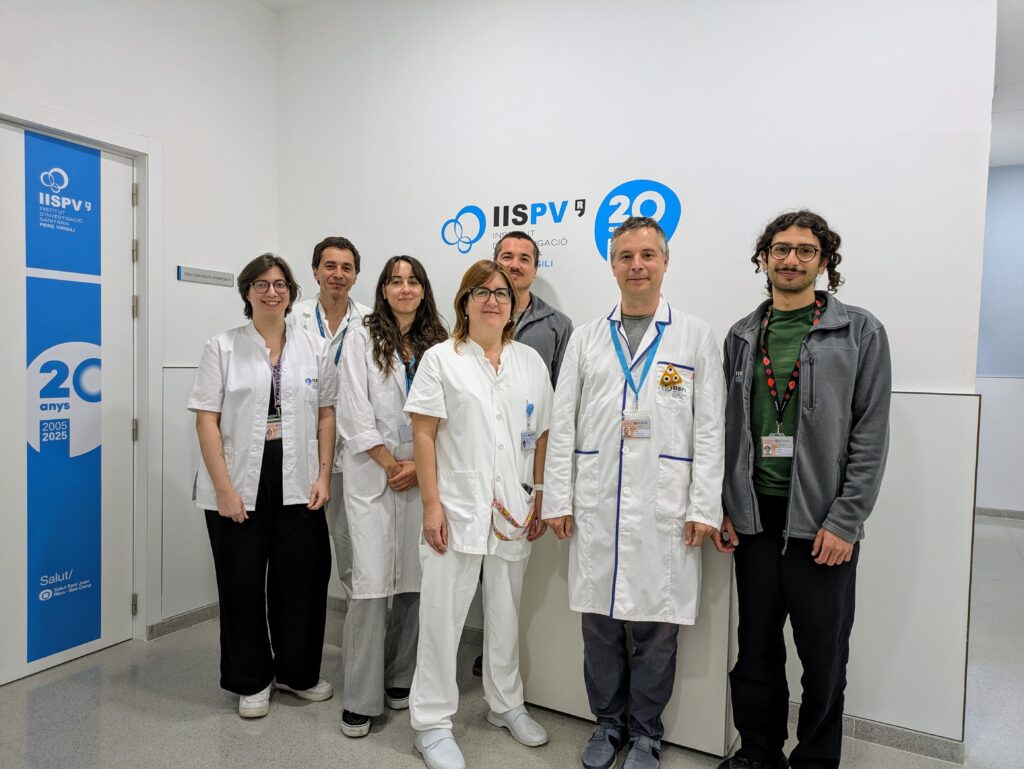
The consumption of nuts during pregnancy, especially walnuts, benefits the neuropsychological development of children and adolescents, according to a study by the Institut d’Investigació Sanitària Pere Virgili (IISPV), titled Maternal prenatal nut and seafood consumption and child neuropsychological function from 4 to 15 years of age: a population-based cohort study, and published in The American Journal of Clinical Nutrition. The study, led by the Clinical and Epidemiological Neuroscience Research Group (NeuroÈpia) of the IISPV, includes contributions from Barcelona Institute for Global Health (ISGlobal), a centre supported by the “la Caixa” Foundation, and the California Walnut Commission, and is also included in the INMA project. This observational study focuses on the influence of maternal diet during gestation, a critical period for early brain development, and also highlights adolescence as another key stage when several brain regions continue to mature.
A sample of 1,737 mother-child pairs from four Spanish regions was studied: Asturias, Guipúzcoa (Basque Country), Sabadell (Catalonia) and Valencia. Maternal diet was analyzed using a food frequency questionnaire, while the children’s neuropsychological function was assessed through standardized tests measuring reaction time and variability (attention), working memory, and fluid intelligence.
The research took into account the consumption of fish—especially fatty fish—which, like walnuts, contains high levels of omega-3 fatty acids. These healthy fats have been shown to have a positive impact on the brain development of children and adolescents, according to the study’s findings. However, the researchers leading the project caution that fatty fish consumption should be approached carefully, and the recommended portions established by the WHO, via the European Food Safety Authority (EFSA) and the Spanish Agency for Food Safety and Nutrition (AESAN), should not be exceeded. Ariadna Pinar Martí, the study’s lead researcher, notes that high consumption of walnuts and fatty fish is associated with improvements in attention, working memory, and fluid intelligence. She adds that the omega-3 fatty acids present in these foods partially contribute to this relationship with neuropsychological development, particularly regarding attention.
Impact on risky decisions
The NeuroÈpia Research Group continues to investigate how maternal consumption of nuts and fish influences the brain development of offspring. They have also focused on the acquisition of more complex skills, such as risky decision-making in eleven-year-old children. In this regard, the article Maternal nut and fish consumption during pregnancy and child risky decision-making at 11 years old explores whether a maternal diet that includes these foods is associated with certain cognitive functions and behaviors, such as impulsivity. This study, led by researcher Marina Ruiz Rivera, has been published in the European Journal of Child and Adolescent Psychiatry. It emphasizes that the consumption of nuts and fish during pregnancy may have an effect on complex brain functions, such as decision-making.
The final sample consisted of 1,386 preteenagers and their mothers, with 1,081 participants specifically assessed for decision-making. According to Ruiz Rivera, higher maternal consumption of nuts during the first trimester of pregnancy was associated with a lower score in risky decisions in eleven-year-old children. Moderate fish consumption was associated with a higher impulsivity index in children of this age. Therefore, this study “adds to the evidence on the importance of nutrition during pregnancy for complex neuropsychological functions”. The study also emphasizes that “the available data are limited to eleven years of age, a stage in which the prefrontal cortex is not fully developed”, and therefore “a definitive causal relationship cannot be established”.
Looking ahead to future research in the field of nutrition, the NeuroÈpia Research Group highlights the importance of incorporating neuroimaging techniques. Applied specifically to the cohort studied in the two projects, “it will open up new scenarios for novel measurements, represent an innovation in this field, and allow us to examine whether diet during pregnancy influences not only cognitive functions but also brain structure”, emphasizes Jordi Julvez, head of the research group behind the two studies.
Bibliographic reference of the first study:
Pinar-Martí A, Ayala-Aldana N, Ruiz-Rivera M, Lertxundi N, Subiza M, González-Safont L, Vioque J, Riaño-Galán I, Rodríguez-Dehli C, Iglesias-Vázquez L, Arija V, Fernández-Barrés S, Romaguera D, Pascual-Rubio V, Fabregat-Sanjuan A, Healy D, Basagaña X, Vrijheid M, Guxens M, Foraster M, Julvez J. Maternal prenatal nut and seafood consumption and child neuropsychological function from 4 to 15 years of age: a population-based cohort study. Am J Clin Nutr. 2025 May 5:S0002-9165(25)00249-7. doi: 10.1016/j.ajcnut.2025.04.032. Epub ahead of print. PMID: 40334748.
Bibliographic reference of the second study:
Ruiz-Rivera M, Pinar-Martí A, Babarro I, Ibarluzea J, Vioque J, Llop S, Fernández-Somoano A, Tardón A, Pascual-Vicente R, Fabregat-Sanjuan A, Fernández-Barrés S, Romaguera D, Guxens M, Julvez J. Maternal nut and fish consumption during pregnancy and child risky decision-making at 11 years old. Eur Child Adolesc Psychiatry. 2025 Jun 10. doi: 10.1007/s00787-025-02750-5. Epub ahead of print. PMID: 40493090.