



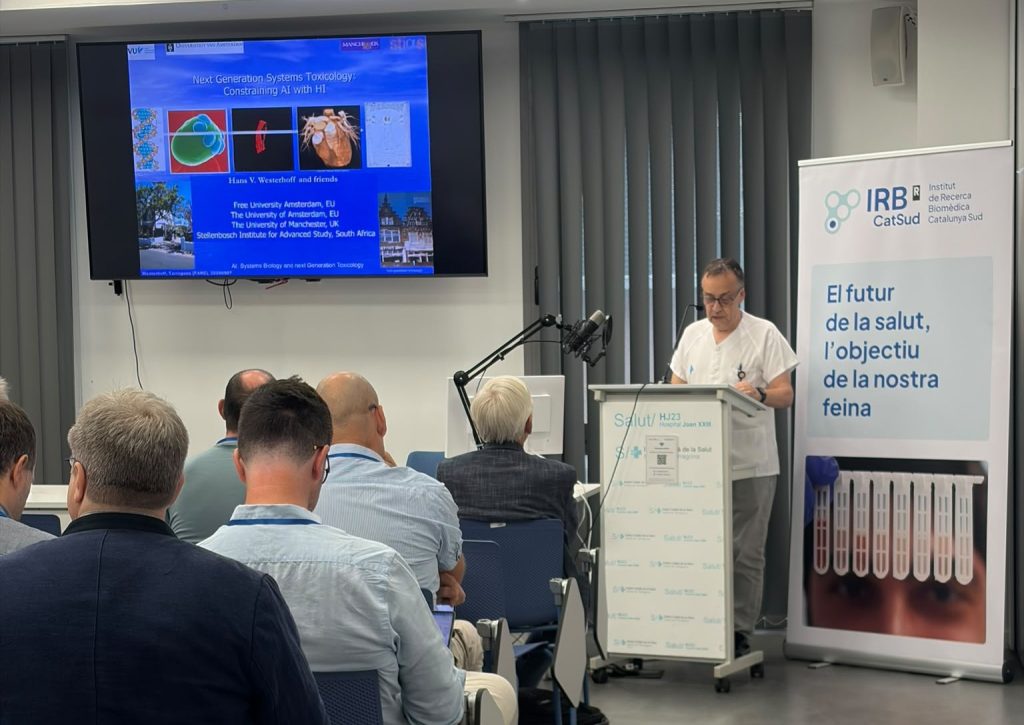
This week, Tarragona is the European headquarters for the protection of health and the environment against the risks caused by products of chemical origin. A hundred scientists, researchers and risk assessors from the European continent are meeting until this Thursday to mark the roadmap for the scientific regulation of the European Union in the field of chemical safety in the coming years. The Institute for Biomedical Research of Catalonia South (IRB CatSud) is leading this meeting with representatives of a total of 200 international organizations. The objective is to accelerate a paradigm shift through the use of artificial intelligence (AI) and cutting-edge technologies, in the assessment of the risks that chemical products pose to health and the environment. Through these new analytical approaches, the scientific community seeks to predict the impact of pollutants on health and the environment in a much faster, more precise, transparent and economically efficient way.
The meeting, which began on Monday, is led by IRB CatSud together with international scientific organizations from Germany (BfR), France (ANSES) and Greece (AUTH). The conference will feature the direct participation of the continent’s top regulatory authorities, including the European Food Safety Authority (EFSA), the European Chemicals Agency (ECHA) and the European Medicines Agency (EMA).
Throughout Monday and Tuesday, presentations and discussions focused on the impact of emerging technologies, with a special emphasis on the use of artificial intelligence language models for the automation of risk assessment. In parallel, specialists participated in an intensive hackathon to develop prototypes of next-generation analytical tools.
This Wednesday, the focus shifted to the annual meeting of the Working Group on Scientific Data Management (WP7), led by the VITO Institute (Belgium), the University of Birmingham (UK) and IRB CatSud, represented by Vikas Kumar and his team. Experts discussed guidelines to ensure that the vast amount of information generated in Europe is fully accessible and interoperable. This will lay the foundations for the future Centre for Chemical Risk Assessment, contributing to the creation of the European Union’s Common Data Platform on Chemicals.
This meeting is held within the framework of the Partnership for the Assessment of Risks from Chemicals (PARC), a €400 million European megaproject, co-financed by the European Union’s Horizon Europe framework program. PARC brings together more than 200 public and academic institutions from nearly 30 countries with the mission of promoting the European Commission’s Sustainability Strategy for Chemicals and advancing towards the zero pollution goal of the European Green Deal.