




The Institut Pere Mata University Hospital and IRB CatSud are organizing, on December 3 , the 1st Research and Innovation Conference for Residents , a meeting aimed at residents ( MIR, IIR, PIR, FIR, BIR, RFIR and QIR ) from the different teaching units in the province of Tarragona. The objective of the conference is to create a common space to share research projects, foster collaborations and promote interest in research and innovation among professionals in training.
Research is a fundamental pillar for the progress of knowledge and for the continuous improvement of healthcare practice. For this reason, this conference aims to become a space for the exchange of experiences, ideas and initiatives that allows to give visibility to the research activity developed by residents, as well as to favor the creation of synergies between specialties, centers and disciplines.
Collaboration, scientific curiosity and innovation are essential elements to face the present and future challenges of our health system and this is what will be evident at the conference. With this initiative, the organization wants to promote a more connected, active and committed research community.
This event aims to consolidate itself as a regular meeting point between residents and the organizing team’s desire is for it to become a reference space in the territory, capable of showcasing the talent, effort and commitment of professionals in training.
This first edition is conceived as the beginning of a collective project with a vocation for continuity, with the aim of contributing to strengthening the research community of the territory.
At this link you can view the program and register, either to attend the event or to present a paper.
Around sixty researchers from all over the country, from both basic and clinical research fields, have participated in the first national conference on genetics in psychiatry, held in Reus this Wednesday and organized by the Hospital Universitari Institut Pere Mata (HUIPM) and the Institut de Recerca Biomèdica Catalunya Sud (IRB CatSud), with the participation of the CIBERSAM network (Centro de Investigación Biomédica en Red en Salud Mental). One of the main achievements of the meeting, held at the HUIPM facilities, has been the promotion of a shared proposal to create a stable network or working group in genetics in psychiatry, with a long-term vision and with the aim that it may evolve into a future scientific society.
During the conference, strategic lines were discussed, such as promoting collaborative work, sharing data and knowledge, or creating a repository of genetic data, as well as the need to strengthen the transfer of results to clinical practice and society.
The meeting has represented a turning point in the field of genetics in psychiatry, since until now researchers specialised in the genetics of psychiatric disorders in the country had never met in a specific forum. In recent years, the growth of research in this field and the emergence of results with potential clinical application have favoured the consolidation of a critical mass that has made it possible to promote this initiative.
“It is the first conference held by specialist researchers in genetics of psychiatric diseases, and the reason is that it is a relatively innovative field. Over the years, the researchers we met at conferences said we had to do something together and, at the end of last October, at an international psychiatric genetics conference in Mexico, we decided to do it and chose to hold the first conference in Reus,” said the research director of HUIPM and deputy director of IRB CatSud, Elisabet Vilella.
At the conference, the different participating teams also shared their lines of work and presented the latest advances in genetics in psychiatry, with the aim of generating synergies and exploring new ways of collaboration. “Our group presented work related to the development and characterisation of neuronal lines from patients with first psychotic episodes, where we look for biological signals to help find the best diagnosis so that there can be the most personalised treatment possible, for example in the development of schizophrenia,” explained the researcher from the Instituto de Investigación Sanitaria de Valencia (INCLIVA), Ricardo Ruiz Miguel, one of the speakers at the conference.
The organisers also highlighted that initiatives like this help to accelerate the transfer of scientific knowledge into real applications and to promote collaboration between research groups, also incorporating work with patient associations as one of the key axes for the future.
With this first edition, the conference has laid the foundations to become a regular reference meeting at the national level, with the intention of continuing to strengthen scientific cooperation and to increase the impact of research in mental health for the benefit of society.
ICS and AQuAS organize a session on June 2 to prepare candidates for the research career awards with innovative tools for personal presentation.

The Institut Català de la Salut (ICS) and the Agència de Qualitat i Avaluació Sanitàries de Catalunya (AQuAS) are organizing a training session on narrative CVs, to be held next Monday, June 2, from 3 to 5 pm, in which attendees will become familiar with what a narrative CV is and the main differences with the traditional one, being able to analyze experiences of using the narrative CV in different evaluation processes and develop the necessary skills to write the CV in a narrative way.
The training is mainly aimed at those people who want to apply for the Premis a la Trajectòria Investigadora, which rewards those who have contributed to the development of ICS research. Registration is now open, with a form to fill in, and places are limited.
The AQuAS Research team has prepared an infographic on how to write a health impact narrative, with the basic information to prepare the application for the Research Career Achievement Awards.
The unit’s objective is to provide an in-depth understanding of flow cytometry
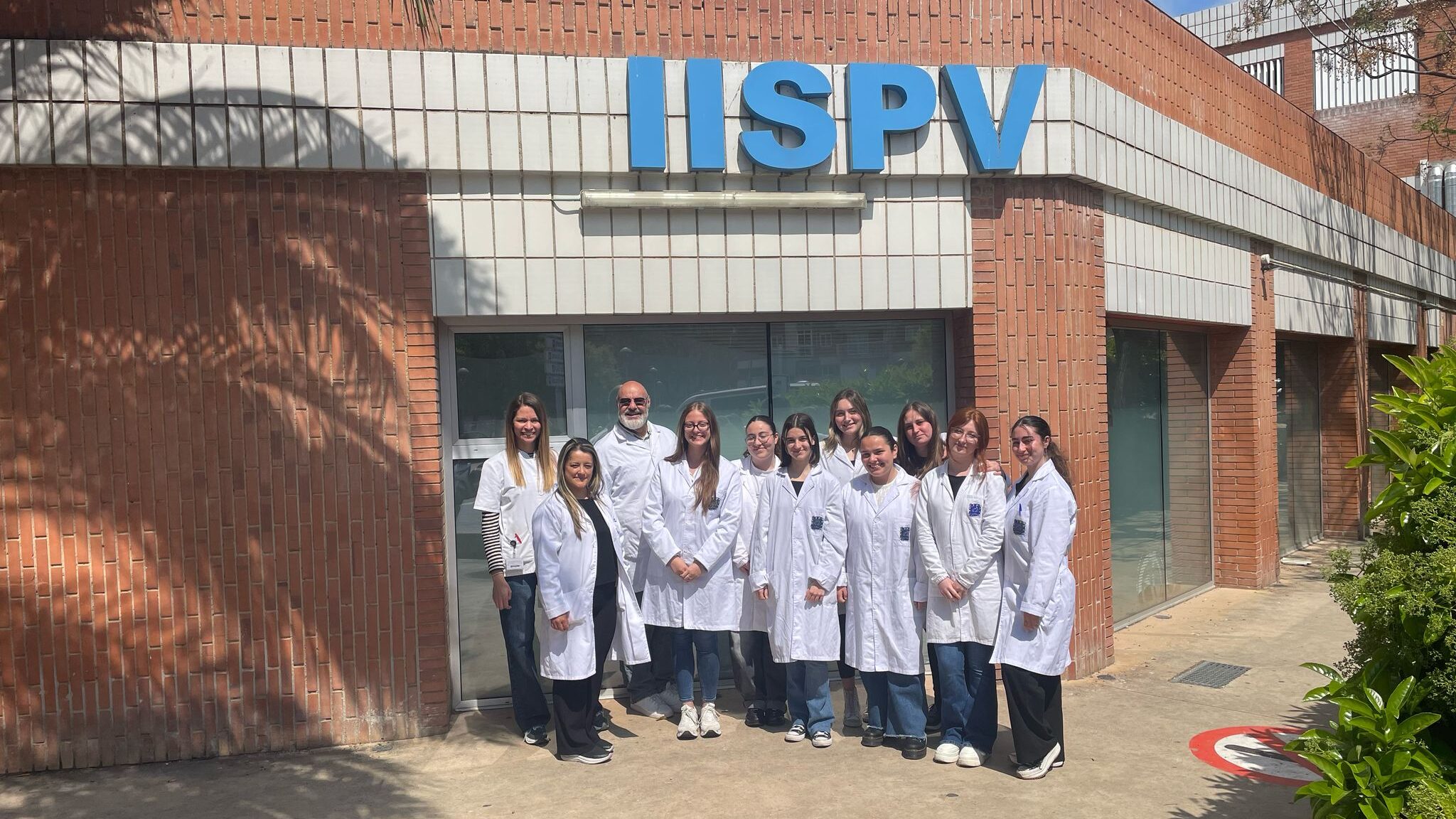
The Cytometry Platform of the Institut d’Investigació Sanitària Pere Virgili (IISPV) continues to advance the understanding of flow cytometry through training sessions for students. Recently, the unit organized and conducted two courses for students from Universitat Rovira i Virgili (URV) and the Institut Cal·lípolis of Tarragona. In the first case, it was the third edition of the Basic Course in Flow Cytometry, aimed at students from the Degree in Biotechnology, the Degree in Computer Engineering and Biotechnology, and the Double Degree in Biochemistry and Molecular Biology at URV.
The students received both theoretical and practical training during their visit to the Cytometry Unit, where they observed the processing of peripheral blood samples. They were able to distinguish cell populations based on size, complexity, and the use of different light-reactive chemical compounds (fluorochromes).
As for the second group of students, who are pursuing a Higher Degree in Clinical and Biomedical Laboratory Studies at the Cal·lípolis Institute, they attended the fifth edition of the Basic Course in Flow Cytometry. The aim of the training was to strengthen the connection between students in the health sciences field and the IISPV. The course consisted of a theoretical and practical session, which also included the analysis of a peripheral blood sample.
The students thus had the opportunity to participate in a training session where they became familiar with the basic concepts of the technique while observing the live processing of a peripheral blood sample labeled with fluorochromes.