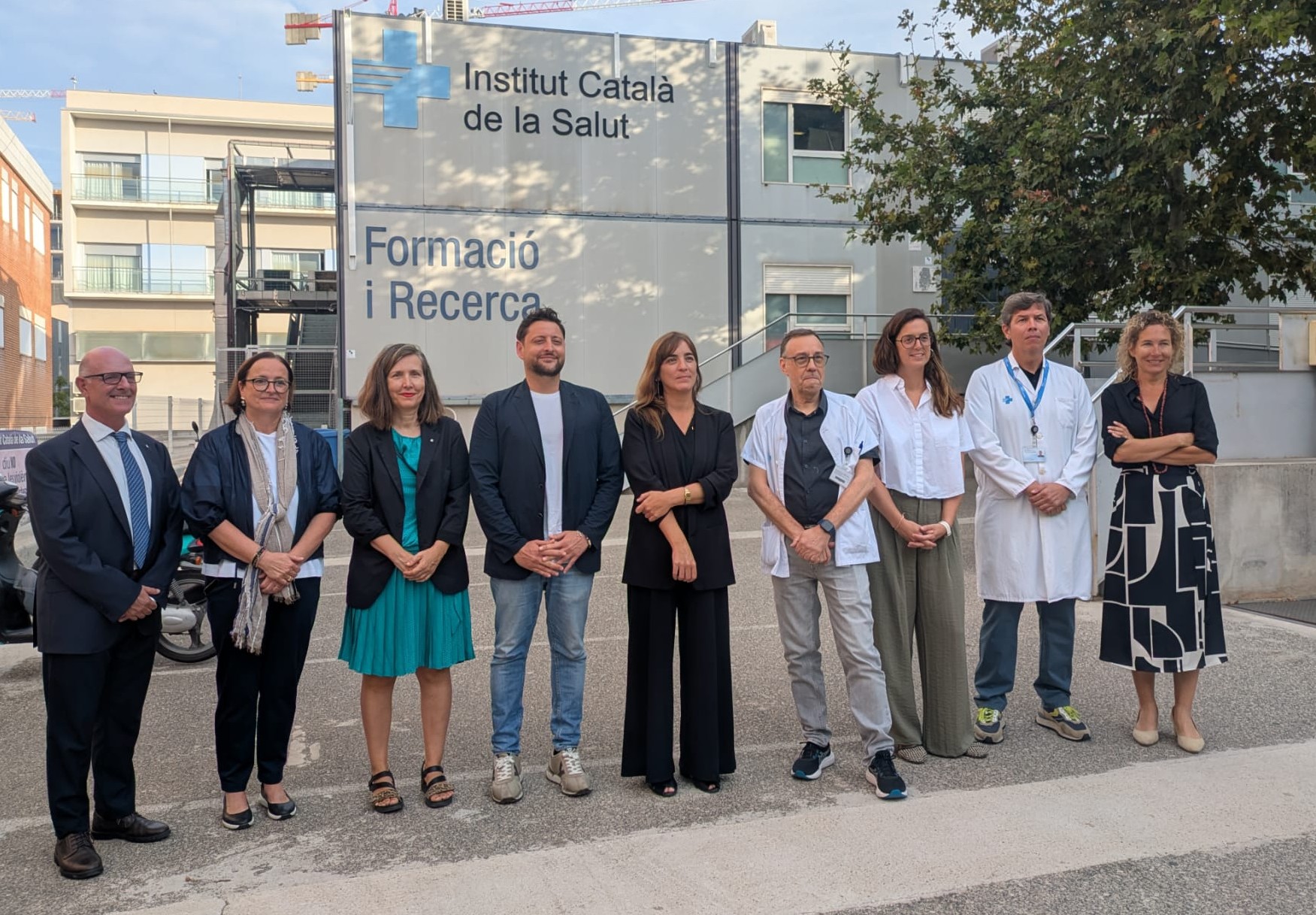

- The results, published in the journal Resuscitation Plus, show that women have fewer shockable rhythms, lower survival and different causes of death than those observed in men.
- The research, within the framework of the Registry of Cardiac Arrests and Sudden Death of Catalonia (RAIMCAT), has been developed by the SEM in collaboration with the Institute of Legal Medicine and Forensic Sciences of Catalonia, the Biomedical Research Institute of Catalonia South (IRB CatSud), the Sant Joan University Hospital of Reus, the Rovira i Virgili University, among other institutions.
A study led by the Medical Emergency System of Catalonia (SEM), in collaboration with the Institute of Legal Medicine and Forensic Sciences of the Department of Justice and Democratic Quality, the Biomedical Research Institute of Southern Catalonia (IRB CatSud), the Sant Joan University Hospital in Reus, the Rovira i Virgili University, the Polytechnic University of Catalonia, the IDIAP Jordi Gol and other Catalan institutions, concludes that the survival of women after sudden cardiac death is approximately half that recorded in men.
The research, recently published in the scientific journal Resuscitation Plus , concludes that women not only survive less frequently after sudden cardiac death, but also present a different clinical profile compared to men that can condition prevention, treatment and survival.
The differences affect aspects as diverse as the age at which the episode occurs, the initial heart rhythms, the causes that originate the cardiac arrest and some clinical history that may play a relevant role during the assessment and treatment of patients.
The study, carried out within the framework of the Registry of Cardiac Arrests and Sudden Death of Catalonia ( RAIMCAT ), analysed 639 cases of sudden cardiac death occurring between 2014 and 2017, 191 of which were women, 29.9% of the total. The results show a survival rate of 4.2% in women compared to 9.9% in men. The study also concludes that women presented fewer shockable rhythms —cardiac arrest rhythms in which the application of an electric shock with a defibrillator is indicated— than men (21% compared to 36%) and received fewer resuscitation attempts.
These results indicate that sudden cardiac death is not a homogeneous pathology and that incorporating the gender perspective can contribute to improving both prevention and diagnostic and therapeutic strategies.
“Sudden cardiac death does not manifest itself in the same way in women and men. Understanding these differences is essential to adapt preventive strategies, care protocols and increase the chances of survival,” highlights Dr. Youcef Azeli from the Medical Emergency System and principal investigator of the study.
A differentiated clinical profile
The analysis of 639 cases of sudden cardiac death shows a lower incidence in women. However, their probability of survival is significantly lower than that of men, approximately half.
The study highlights that women reach the episode of sudden death with different characteristics. On average, they are older than men when sudden death occurs (74 years compared to 66 years), they have less frequent shockable rhythms – those that offer a greater chance of success with early defibrillation – and they suffer certain causes of death at a higher rate.
Among these causes, pulmonary embolism stands out, which is more than four times more frequent in women than in men (13.3% compared to 3%). There is also a higher burden of psychiatric disorders than in men (15% compared to 9%), a higher history of alcohol consumption (25% compared to 16%), and a higher presence of antidepressants (11% compared to 2%).
Implications for clinical practice
The authors emphasize that pulmonary embolism may be underdiagnosed in women during resuscitation, which limits the use of thrombolytic treatment at the time of arrest. The study also emphasizes the need for closer cardiovascular monitoring using electrocardiograms, especially to monitor the QT interval, in women on psychotropic drug treatment, especially if they also consume alcohol.
About the study
The study has been led by the Medical Emergency System of Catalonia (SEM), with the Institute of Legal Medicine and Forensic Sciences of Catalonia as the main scientific partner, and has had the collaboration of the Biomedical Research Institute of Southern Catalonia (IRB CatSud), the Sant Joan University Hospital of Reus, the Rovira i Virgili University, the Polytechnic University of Catalonia (UPC), the IDIAP Jordi Gol and other institutions.
The research is part of the Registry of Cardiac Arrests and Sudden Death of Catalonia (RAIMCAT), which integrates healthcare data from the SEM, hospital clinical information, data from judicial autopsies and the primary care network. This approach allows us to reconstruct the complete process of sudden cardiac death and obtain a unique perspective in Europe and much more globally.
Bibliographic reference
Azeli Y., Barbería E., Solà-Muñoz S., Landín I., Fernández A., Rey-Reñones C., García-Gual C., Gomez-Tortosa A., Granado-Font E., Fernández-Sender L., García-Vilana S., Bonet G., Jiménez-Fàbrega X., Bardají A.
 Facebook
  Mail
Mail  WhatsApp