

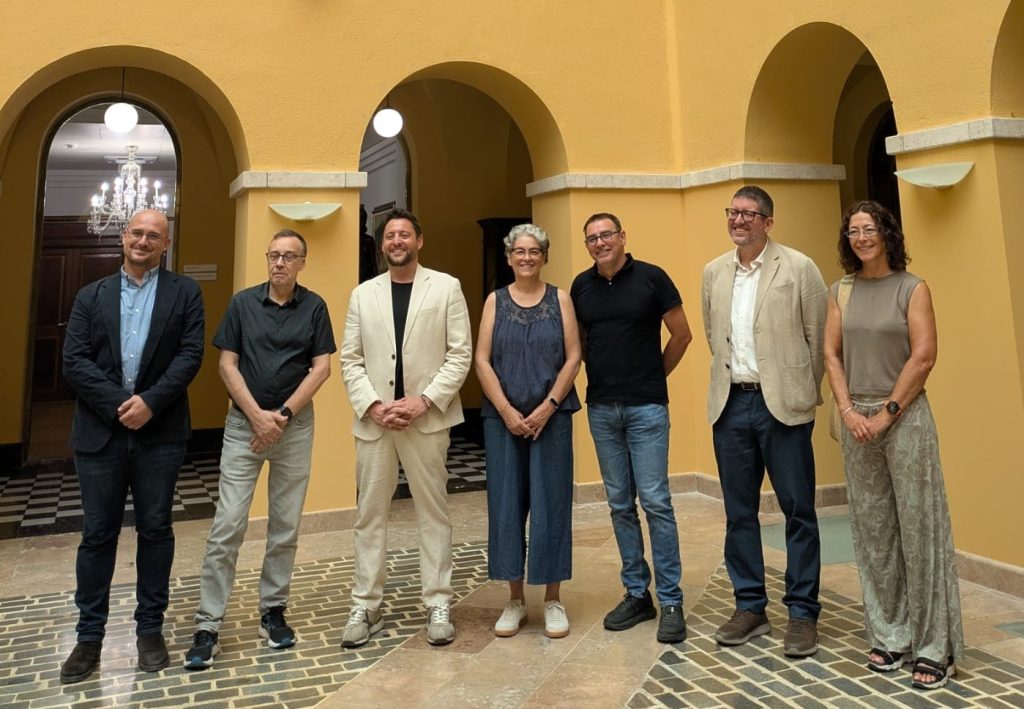
The Tarragona Provincial Council has presented, this Wednesday, September 9 at the Provincial Council Palace, the latest developments in a line of aid intended to support the work of the region’s research centers , which was launched for the first time last year with a total allocation of up to €600,000. The objective, as mentioned, is to continue strengthening the role of research centers as engines of development, innovation and knowledge transfer.
The first call for funding supported projects from seven research centers, including IRB CatSud, which received €100,000 – the maximum awarded per center – to finance the Health and Sustainability Innovation Network – XISS project, which gave life to the creation of the Clinical Research Unit (UIC), which must allow access to clinical trials in all phases for the citizens of Camp de Tarragona and Terres de l’Ebre.
As noted by the Provincial Council, the corporation maintains this line of aid this year, thus consolidating a specific line of support for research. As explained by the first vice-president and deputy delegate for European Projects and Knowledge Region, Rubén Viñuales, this first experience “has allowed us to verify the strength and diversity of the research system in the regions of Tarragona, with projects linked to areas such as health, sustainability, chemistry, agri-food, biotechnology, heritage or wine innovation”.
With the support of the Provincial Council of Tarragona.
*EVENT POSTPONED: due to the weather alert expected for October 1, and for the safety of all attendees, the 6th Solidarity Dinner at the Olympus Palace 4* Hotel in Salou is rescheduled and will take place next Thursday, October 22.
With the aim of contributing to awareness for the prevention of cardiovascular diseases and at the same time supporting scientific research, the Hotel Olympus Palace 4* in Salou will celebrate a new edition of its traditional solidarity dinner on the SUMMIT rooftop on Thursday 1 October. This year the profits will go to the Biomedical Research Institute of Southern Catalonia (IRB CatSud) and the donation will contribute to the promotion of research projects in the prevention of cardiovascular diseases and, specifically, to the INVESCART group of the IRB CatSud, which carries out its research work at the Hospital Joan XXIII in Tarragona.
During the public appearance to present this solidarity dinner, Gil Cristià , on behalf of the property of the Hotel Olympus Palace 4* , stated that “the heart we have located in front of the hotel and on the Salou promenade symbolize the heartbeat for which we are joining efforts this 2026. We want to highlight the professionals of the territory and everything they do to look after our hearts”. Gil Cristià also highlighted the poster for the solidarity dinner, worked on by the students of the Tarragona School of Art and Design within the ‘Olympus Scholarship’ project.
For his part, Dr. José Luis Ferreiro , Head of the Cardiology Service at the Joan XXIII Hospital in Tarragona, explained that “in hospitals of maximum technological complexity like ours there are three main axes: healthcare work, research and teaching. And in terms of research, we have very powerful lines of research in cardiology within the state and also at an international level. Therefore, what is achieved at this solidarity dinner will help consolidate existing projects as well as create new ones. We are very grateful to them.”
In this sense, Dr. Joan Vendrell, director of the IRB CatSud, stressed that “by conducting research and especially research closely linked to the territory, we improve, for example, the healthcare sector. Consequently, this affects our quality of life and, therefore, this is a very important impact that we must be aware of as a population. This type of initiative, such as the one planned by the Olympus Palace Hotel, is fundamental as a society.”
Other entities also involved in the initiative are Rotary Club Tarragona and the Salou City Council. Esther Fernández, vice president of the Rotary Club Tarragona, commented that “from our entity we will give all possible support to the cause and we will do our utmost to spread the word among our social mass to help make it a success.”
Finally, the mayor of Salou, Pere Granados , added that “initiatives like these from the Hotel Olympus Palace demonstrate the spirit of Salou and its entities. A solidarity linked to the hearts of the people, to the heart of Salou and which is a benefit for the territory. Many congratulations.”
Since 2019, adding alliances with the territory
This will be the sixth charity dinner organized by the Hotel Olympus Palace. The first was in 2019 for the Tarragona Cancer Association; in 2022 for autism (Todos en Azul); in 2023 for Alzheimer’s (Rosa Maria Vivar Foundation), in 2024 for the Pere Virgili Health Research Institute and the Stroke Unit of the Neurology Service of the Joan XXIII Hospital in Tarragona. Finally, the 2025 edition was held for the International Solidarity Sports Foundation (ESI), raising 16,190 euros.
The Olympus Palace 4* Hotel also wanted to thank the sponsors involved in the cause of this 2026: Grup Oliva Motor, Global Talke, Supermercats Michelangelo, Porcelanosa, Damm Foundation, The British School of Costa Daurada, Tomas Llobet – Cuines Profesisonals Industrials, Bugamed – Bugaderia del Mediterrani, Frutas López Sánchez and Metalics Aleix SL.
Participation in the charity dinner
The charity dinner will be held on Thursday, October 1, at 7 p.m., on the SUMMIT rooftop of the Olympus Palace 4* Hotel. The price for the charity cause is 60 euros per person. There is also a zero row for all those people and entities who want to collaborate. “It will be a cocktail dinner full of surprises and raffles. All in an incomparable space, in a unique evening that will please the attendees, I am convinced.” Registration for the charity dinner must be formalized by paying the 60 euros to the following number: ES67 2100 8669 7702 0002 8168 (also zero row). For any questions, the contact number is 690 149 866 .
Tarragona hosted the 23rd Liver Sinusoid Meeting 2026 from May 22 to 26. This is one of the main international meetings in the field of liver blood vessel biology. The congress brought together around 200 researchers and clinicians from different countries and placed the city and its biomedical research ecosystem at the center of the international scientific scene.
Jordi Gracia-Sancho, a researcher at IRB CatSud and head of the Liver Research Unit, was part of the organising committee and one of the main promoters of the meeting, being also the president of the International Society for Hepatic Sinusoidal Research (ISHSR). The event also included the participation of Sonia Fernández-Veledo, co-leader of the Diabetes and Associated Metabolic Diseases research group (DIAMET), highlighting the important role of local researchers in the scientific coordination of the congress.
Over five days, participants shared the latest advances in liver vascular biology, inflammation, immunity and fibrosis, as well as new findings on liver diseases. The programme included talks by international experts, oral presentations and poster sessions, encouraging scientific discussion and new collaborations.
Within the congress, the DIAMET group from IRB CatSud had an active role with several scientific contributions. Sonia Fernández-Veledo chaired a session on stellate cell biology and fibrosis. Predoctoral researcher Laura Salmerón gave an oral presentation about how certain liver mechanisms influence immune response. Anna Marsal also presented a poster on how these mechanisms affect liver cell function and their response to nutrients.
One of the most important moments of the meeting was the celebration of the 50th anniversary of the International Society for Hepatic Sinusoidal Research (ISHSR), which reviewed 50 years of progress in this field. Key initiatives for the future were also presented, including an international agreement on the use of new experimental models in liver research.
International visibility and local impact
Beyond its scientific importance, the congress helped promote Tarragona as a city able to host large international events, combining excellent research with culture, heritage and gastronomy. The social programme included cultural activities and visits so participants could explore the region.
At the same time, the organisers promoted outreach activities through workshops in local schools, bringing biomedical research closer to students and encouraging interest in science.
This edition also created new collaborations, strengthening the role of Tarragona and IRB CatSud in international liver research.
Scientific outreach in local schools
As part of the activities before the congress, researchers from IRB CatSud, CIBER and CSIC, together with members of the Scientific Committee, organised outreach actions to bring biomedical research and liver science closer to the local community.
They held four workshops for secondary school students (3rd year ESO) from Vedruna Tarragona and La Salle Torreforta. These sessions explained the liver, health and research in a simple and interactive way.
This initiative helped increase students’ interest in science and highlighted the importance of research in understanding and treating liver diseases, while strengthening the connection between scientists and the local community. The workshops were led by researchers involved in the congress, including Jordi Gracia-Sancho, Anna Marsal, Anabel Fernández-Iglesias and Anna Moles.
The congress was supported by several institutions, including Tarragona City Council, Tarragona Provincial Council, the Spanish Ministry of Science, Innovation and Universities, and the Government of Catalonia.
After Tarragona, the next edition of the Liver Sinusoid Meeting will take place in Tokyo in October 2028.
The project is supported by the Diputació de Tarragona, which has granted funding of 100,000 euros to carry out the initiative
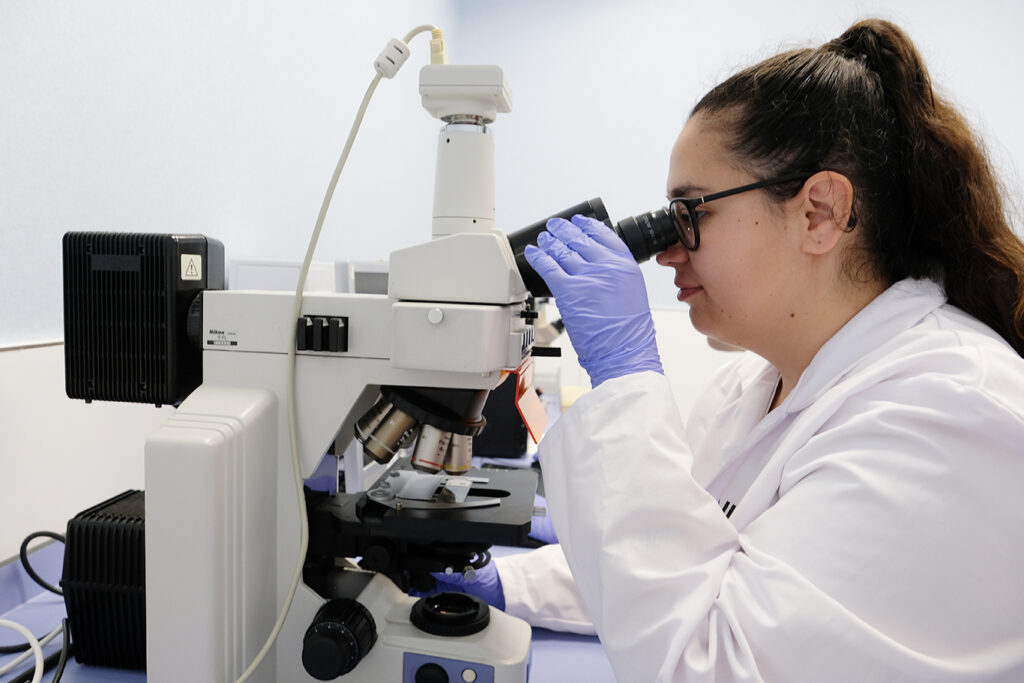
The Pere Virgili Health Research Institute (IISPV) — which from 2026 will become the Southern Catalonia Biomedical Research Institute (IRB CatSud) — is leading the XISS project to integrate biomedical research and social innovation. The aim of the project is to transform the province’s healthcare system by creating effective connections between biomedical research, technological innovation, and citizen participation, with a direct impact on people’s health and well‑being. This initiative is carried out with the collaboration of the Diputació de Tarragona, which has provided a grant of €100,000 to support its development.
The project has enabled the preliminary studies for the creation of the Southern Catalonia Clinical Research Unit (UiC), which will be located at Sant Joan University Hospital in Reus and coordinated together with the three health regions (Camp de Tarragona, Terres de l’Ebre, and Baix Penedès). This infrastructure will make it possible to develop advanced clinical trials, including phase I oncology studies, as well as multicentre research on cardiovascular, metabolic, infectious, and neurodegenerative diseases.
The UiC will make it easier for patients from rural or geographically dispersed areas to take part in studies, reducing inequalities and increasing access to therapeutic innovation. In addition, data interoperability and the implementation of telemedicine services will ensure equal opportunities in access to clinical trials.
The project covers 184 municipalities and 10 counties in the province of Tarragona, involving local and socioeconomic stakeholders (city councils, hospitals, primary care centres, the university, civil society, patient associations, biotechnology and pharmaceutical companies, business clusters, and start‑ups).
Among the results already achieved are:
An analysis of the Spanish Clinical Studies Registry shows that the province of Tarragona has a much lower concentration of clinical trials than Barcelona (21.89 per million inhabitants compared to 114.89). The XISS project addresses this need by ensuring a more balanced distribution of resources and clinical research structures across Catalonia.
The XISS project positions itself as a national reference in translating scientific knowledge into clinical practice, promoting a healthcare system focused on people, the territory, and the reduction of social and geographical inequalities.